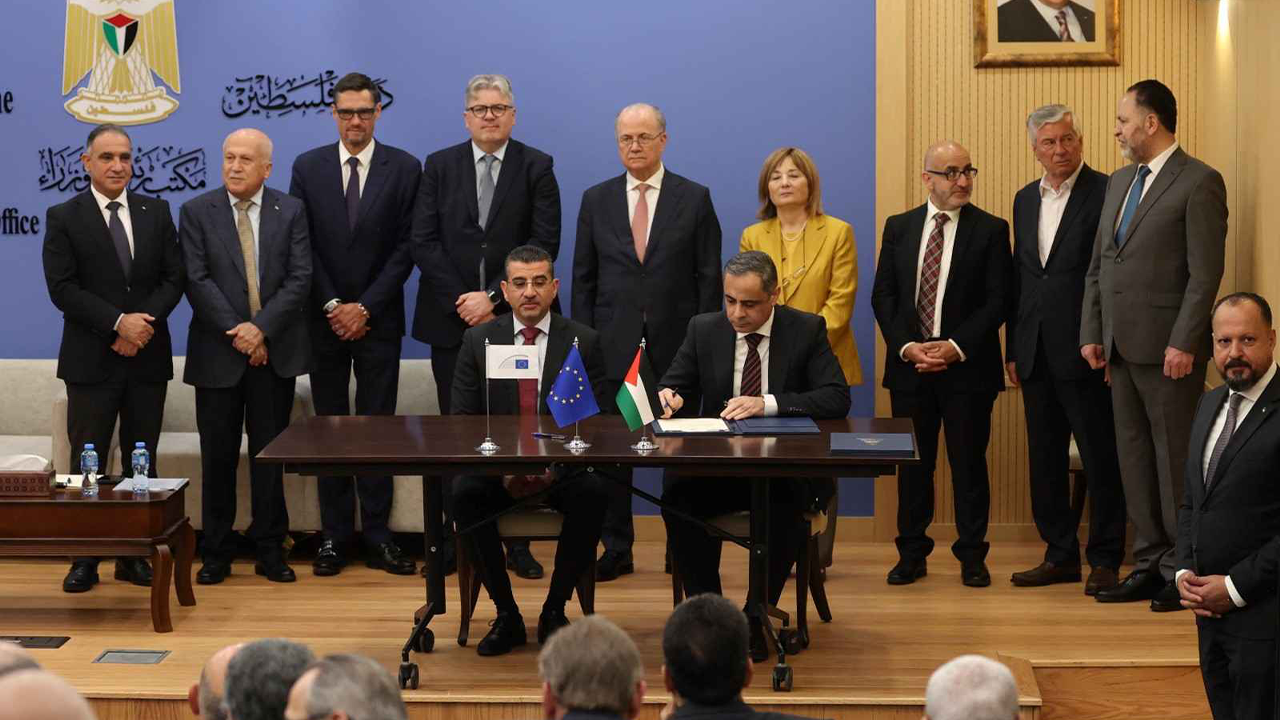
The facility is part of a broader EUR 400 million EU-backed program aimed at expanding access to finance for Palestinian businesses amid ongoing economic pressures.
Palestine Monetary Authority (PMA) and the National Bank have signed a USD 50 million framework financing agreement that will allow the bank to extend funding to micro, small, and medium-sized enterprises (MSMEs) across Palestine.
The agreement forms part of a wider USD 462.3 million (EUR 400M) financing initiative funded by the European Commission. The initiative is implemented by the European Investment Bank (EIB) through the PMA and participating local banks. The program aims to improve access to capital for Palestinian businesses and support economic activity during a period of significant financial and operational challenges.
Why You Should Care
Small and medium-sized enterprises make up a large share of Palestine’s private sector but continue to face limited access to financing. The new facility is designed to channel capital directly to businesses that require funding to maintain operations, invest in growth, and navigate a difficult economic environment.
Alongside the financing package, the program includes EUR 2.1 million in remaining technical assistance funding as part of a broader EUR 3.5 million support program. The funding is intended to strengthen the ecosystem supporting MSMEs, financial institutions, and sector-focused initiatives.
According to the PMA, the implementation of financing facilities totaling approximately USD 395 million represents a significant step toward strengthening the capacity of Palestine’s financial sector to support businesses. Part of the financing provided to local banks will be structured as subordinated debt to reinforce bank capital bases while ensuring that the proceeds remain dedicated to MSME lending.
The financing package brings together several international and local institutions, including the European Union, the European Investment Bank, the Palestine Monetary Authority, and domestic banking partners.
The EIB said Palestinian businesses require reliable financing sources to continue operating, investing, and preserving livelihoods under challenging conditions. The bank noted that the agreements mark the implementation phase of the EUR 400 million facility announced in October 2025, with up to USD 395 million expected to be deployed through partner banks to address urgent financing needs among Palestinian MSMEs.
European Union representatives also highlighted the initiative’s role in supporting employment, economic resilience, and private sector activity by directing financing through local financial institutions.
For the National Bank, the agreement expands its ability to serve small businesses and entrepreneurs by offering more flexible financing solutions and extending access to funding in underserved sectors and regions.
The Ripple
Beyond individual businesses, the initiative could help sustain economic activity across multiple sectors that depend on small business participation. Improved access to credit may support business continuity, preserve jobs, and strengthen local supply chains at a time when many firms face heightened uncertainty.
The agreement also reflects growing reliance on blended finance structures. These structures combine international development funding with local banking networks to increase capital availability in markets facing economic constraints.
What to Watch
The key question now is how quickly participating banks can deploy the financing and whether the capital reaches businesses with the greatest need. As implementation begins, attention will likely focus on lending volumes, sector allocation, and the program’s ability to support business resilience and economic recovery across Palestine.
The agreement also signals continued international support for strengthening Palestine’s private sector. Additionally, access to finance remains a critical factor in sustaining entrepreneurship and long-term economic growth.
If you see something out of place or would like to contribute to this story, check out our Ethics and Policy section.