Egypt’s real estate and hospitality landscape is increasingly being shaped by infrastructure, connectivity, and long-term planning rather than short-term demand cycles. As new transport links, airports, and cultural destinations come online, developers and global operators are reassessing where sustainable growth can be built over the next decade.
That reassessment is now becoming visible in West Cairo.
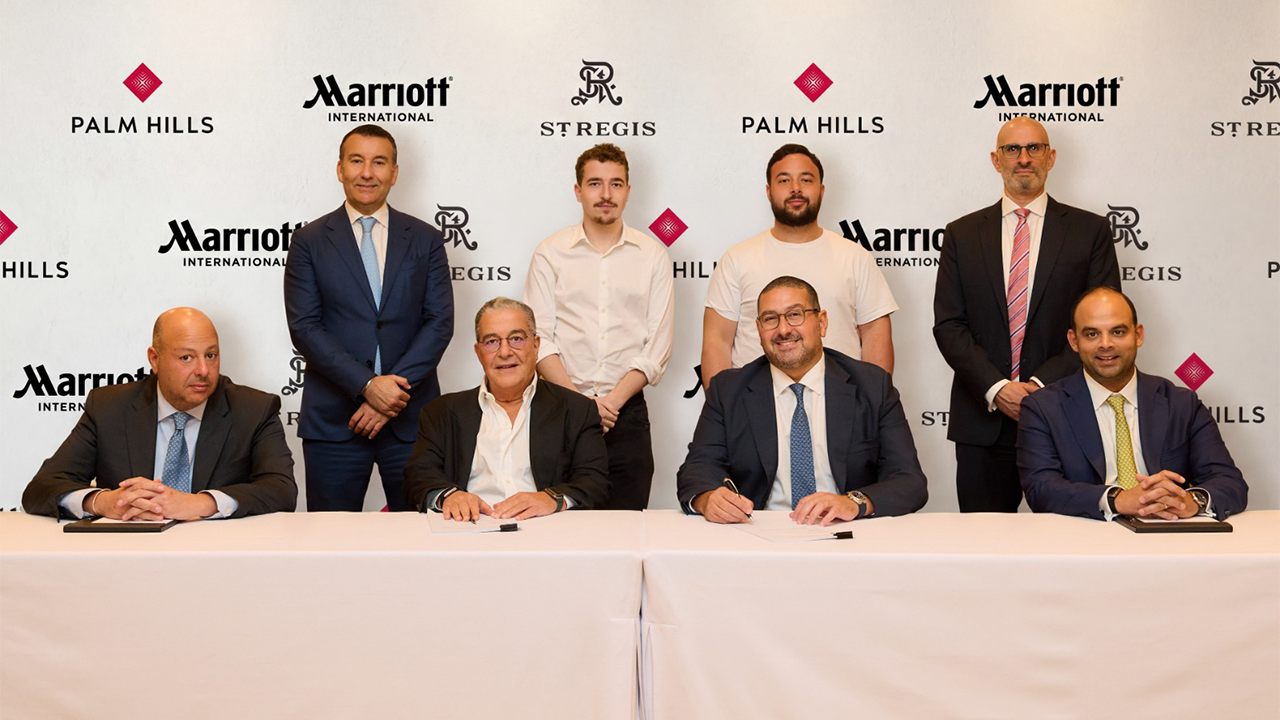
Palm Hills’ partnership with Marriott International to bring The St. Regis brand to the area is more than a hospitality announcement. It is a signal of how long-term capital and global operators are aligning around emerging urban clusters. This follows Palm Hill’s earlier agreement with Marriott International to open a Ritz-Carlton in Palm Hills October (West Cairo), reinforcing a pattern of long-term commitments by global hospitality brands to the area.
A Long-Term Capital Signal, Not a Short-Term Play
With an opening targeted for 2030, the project’s timeline alone sets it apart from typical market-driven developments. Global hospitality brands do not commit their flagship names to projects based on short-term cycles or speculative demand. These decisions are anchored in long-range assessments of infrastructure readiness, tourism flows, urban density, and future purchasing power.
For West Cairo, this long-term commitment suggests growing confidence that the area will mature into a destination with its own economic gravity, rather than remaining a peripheral extension of the capital.
Why West Cairo, and Why Now?
Several structural shifts are converging in West Cairo at the same time. Improved infrastructure has played a critical role, particularly with the presence of Sphinx International Airport and the Grand Egyptian Museum, which together position the area as a natural entry point for both international tourism and business travel. This connectivity is increasingly important as visitor patterns shift toward experiences that combine culture, convenience, and accessibility.
At the same time, the area is seeing an evolution toward larger-scale, master-planned developments that integrate residential, hospitality, retail, and leisure components. These environments are designed to function as self-contained districts, supporting more cohesive urban experiences. As congestion intensifies in East Cairo, West Cairo’s relative openness and capacity for expansion have become increasingly attractive to developers seeking to scale without compromising quality of life.
Palm Hills’ P/X project reflects this evolution. Rather than positioning the St. Regis as a standalone hotel, the project sits within a broader ecosystem designed to support long-term residential and commercial activity.
Branded Residences as a Financial Instrument
Beyond hospitality, the project’s inclusion of serviced apartments and branded residences highlights a wider shift in how luxury real estate is being structured. Globally, branded residences have evolved into a distinct asset class, particularly in emerging markets where buyers place a premium on operational credibility, brand assurance, and long-term value preservation.
In Egypt, this trend is amplified by macroeconomic realities. High-net-worth individuals, diaspora investors, and regional buyers increasingly view branded residences as defensive assets, offering a combination of hard-asset exposure, potential rental yield, and stronger resale liquidity. The brand itself becomes a form of risk mitigation, reducing uncertainty around quality, management, and exit value.
Luxury as Economic Infrastructure
Luxury hospitality projects are often perceived as prestige-driven developments. In practice, they function as economic infrastructure. High-end hotels and branded residences anchor tourism spending, create sustained employment, and catalyze surrounding commercial activity. They also play a strategic role in shaping how cities are perceived by global investors, operators, and travelers.
From this perspective, the St. Regis development is not simply about rooms, amenities, or lifestyle positioning. It is part of a broader effort to reposition West Cairo within Egypt’s urban and economic hierarchy.
The Bigger Picture
As Egypt continues to diversify its economy and attract long-term investment, geography is becoming increasingly strategic. The decision by a global hospitality brand to establish a long-term presence in West Cairo reflects growing confidence in the area’s ability to absorb capital, sustain premium demand, and support integrated urban growth.
For developers, investors, and policymakers, the message is clear: West Cairo is no longer a secondary option. It is emerging as a growth node in its own right, and global players are already positioning themselves accordingly.
If you see something out of place or would like to contribute to this story, check out our Ethics and Policy section.