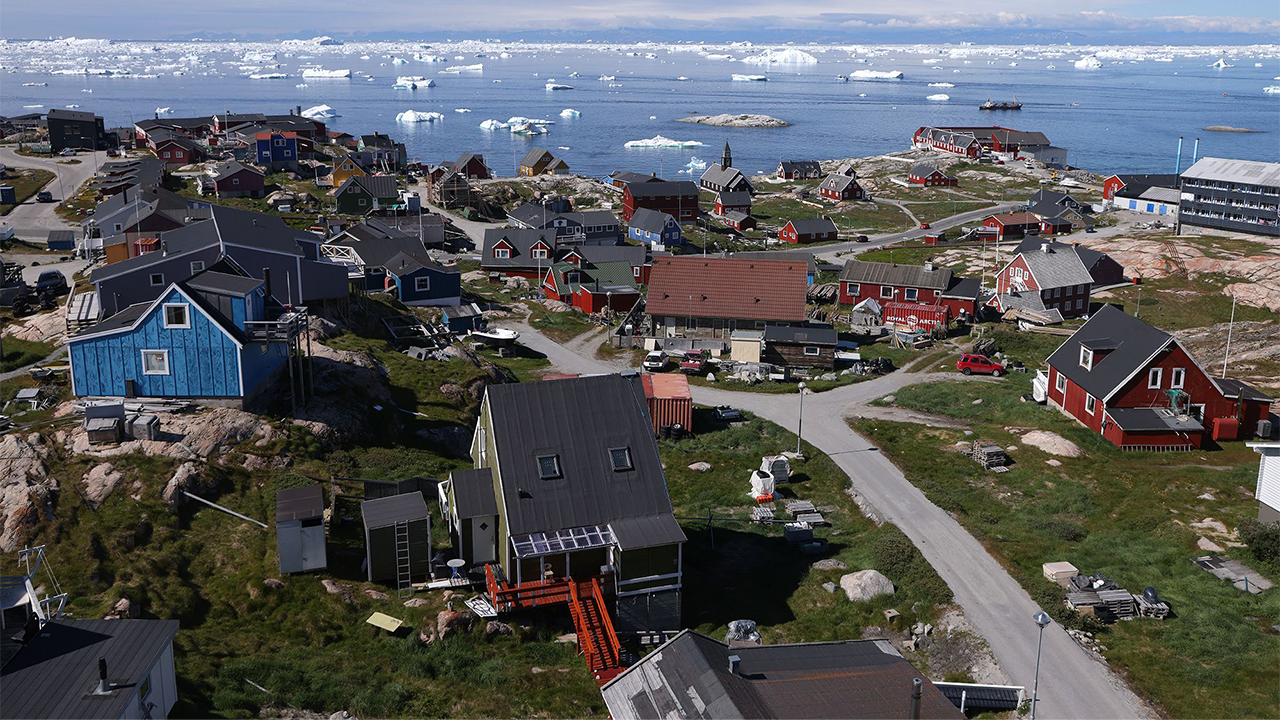
Recently, the White House confirmed that President Donald Trump’s administration is “actively” exploring ways to acquire Greenland. This is a bold move to assert U.S. influence in the face of international scrutiny. However, it is not one entirely without historical precedent.
Throughout history and into the modern day, developed nations have increasingly purchased land from less developed countries, reflecting power dynamics and neocolonial patterns.
A Colonial Echo
The idea of buying Greenland echoes a long history of colonial land deals. In 1917, Denmark sold the Danish West Indies, now the U.S. Virgin Islands, to the United States for USD 25 million in gold.
In an echo of a colonial past, Trump has made his intentions clear to acquire Greenland for national security purposes. These intentions have resulted in international scrutiny and outcry from U.S allies. However, the autonomous territory of Denmark, Greenland, and the Kingdom of Denmark have rejected any suggestion that the country is for sale.
While Trump’s intentions are a more direct echo of a colonial past, in our current times, there has been a growing concern over ‘land grabs.’ According to the Guardian, it has been common in the last decade or so for secretive land agreements to be conducted. Although often hidden, this global phenomenon confirms that wealthy, food-importing nations have been acquiring farmland in lower-income countries.
China’s Land Grab
China, for instance, is at the center of this phenomenon. The country accounts for
around 20% of the world’s population but controls only 8% of arable land. As a result, it has turned to foreign countries in search of farmland. It establishes what it calls ‘friendship farms’ in Africa to bridge its agricultural gap.
In the Democratic Republic of Congo, it grows cabbage; meanwhile, it raises fish in Angola and harvests sesame seeds, cashew, and peanuts in Mozambique.
Who Are the Main Players?
In a study conducted by Lund University in Sweden, it was found that by 2012, most countries had bought or sold land abroad. Moreover, it reports that participants include 126 out of 195 UN-recognized states. However, China, the U.S., and the UK dominate this land-grabbing phenomenon.
The data makes one thing clear: global land ownership is driven by inequality. Wealthy nations in North America, Europe, emerging Asian powers, and oil-rich Middle Eastern states systematically buy up land from low-income nations. These low-income countries are mainly in Africa, South America, Southeast Asia, and Eastern Europe. This dynamic reinforces global inequality and consolidates economic and strategic control in the hands of wealthier nations.
Who’s Driving the Global Land Grab?
| Country | Land Purchased | Land Sold |
| China | Bought from 33 countries | Sold to 3 countries |
| United States | Bought from 28 countries | Sold to 3 countries |
| United Kingdom | Bought from 30 countries | |
| China | 13.2M acres | |
| India | 13.4M acres |
Virtual Trade: How Land Becomes a Commodity
The practice of buying and selling land abroad is often called ‘virtual trade.’ This is when countries can import resources that are not tradable, such as water, land, or even pollution. They do this by purchasing goods and services that rely on these resources. For example, a water-scarce country can “import” water indirectly by purchasing water-intensive crops like meat or paper.
This approach does have some benefits, as it allows countries to focus on producing goods that match the resources they already have. Furthermore, countries with abundant farmland, like Brazil, the U.S., and Australia, can provide food to the world, earning financial gains.
However, this practice still carries risks for those who partake in it. For instance, it risks depleting the local resources of low-income countries that they would otherwise need for their development. Virtual trading can also cause price spikes due to environmental or geopolitical crises. Additionally, selling agricultural land can cause a loss of biodiversity, an increase in carbon emissions, and an increase in water consumption for the host country.
Risks and Opportunities
As populations and living standards rise, competition for farmland and water will intensify. Buying land abroad can harm biodiversity, increase carbon emissions, and overuse water. Environmental or political crises in any country can impact global food prices, just like during the 2008 financial crisis.
Land purchases abroad are now central to the global economy and highlight stark disparities between wealthy and lower-income nations. While this model boosts specialization and global production, it also brings serious environmental and political risks, requiring careful international management.
If you see something out of place or would like to contribute to this story, check out our Ethics and Policy section.