Brent crude jumped 24% in a single morning. The G7 has called an emergency meeting. Trump is already reversing course. And Bahrain’s national energy company just declared force majeure. The oil price shock from the Gulf War is no longer a regional problem; it has become a global one.
Oil markets opened Monday where they left off: in freefall upward. Brent crude leapt 24% in Asian trading, touching $116.71 a barrel, before pulling back to around $110.85 after news broke that G7 finance ministers would hold an emergency call to discuss a joint release of strategic petroleum reserves. West Texas Intermediate followed the same arc, up 28% to $116.45, settling near $108.
The average petrol price in the United States hit $3.45 a gallon by Sunday, up from $2.98 a week earlier. It is heading higher.
G7 finance ministers and Fatih Birol, the executive director of the International Energy Agency, are scheduled to hold a call at 8.30 AM New York time, in a matter of hours. Three G7 countries, including the United States, have already expressed support for a joint release of reserves, according to people familiar with the talks. The figure being discussed is 300 to 400 million barrels, roughly 25 to 30 percent of the IEA’s 1.24 billion barrel strategic stockpile.
This would be only the sixth collective release in the IEA’s history. The last two were in 2022, in response to the oil price surge following Russia’s invasion of Ukraine.
Why You Should Care
If you have been following our coverage of the Gulf war, you already know what is happening in the region. What Monday’s G7 emergency call makes clear is that the economic consequences are no longer contained to the region absorbing them.
The price of oil is not just a number on a trading screen. It is the input cost for almost every manufactured good, every shipping container, every flight, every kilowatt of electricity generated from gas. When Brent crude moves 24% in a morning, the downstream effects travel through the global economy within weeks. China, India, South Korea, Japan, Germany, Italy, and Spain, the world’s largest importers of crude, are already facing the arithmetic of higher energy costs landing on economies that were not growing quickly enough to absorb them.
That is the number the G7 is actually trying to manage. Not the oil price. The inflation it threatens to trigger.
Trump ran on a promise to lower energy costs and reduce inflation. The war his administration is conducting in the Gulf is now directly undermining both commitments. The average American paying $3.45 for a gallon of petrol on Sunday, and more on Monday, is paying a visible, daily cost for a foreign policy decision. That is a political problem with no clean solution, which is why the administration is moving toward a strategic reserve release it said last week it would not need.
The Ripple
The IEA’s strategic reserves exist precisely for this scenario. The 1.24 billion barrels of public stocks, plus another 600 million or so in industry holdings, were designed as a buffer against supply shocks severe enough to destabilize importing economies. The Arab oil embargo of 1973, which sent prices soaring and triggered fuel shortages across the western world, is the founding crisis the system was built to prevent from recurring.
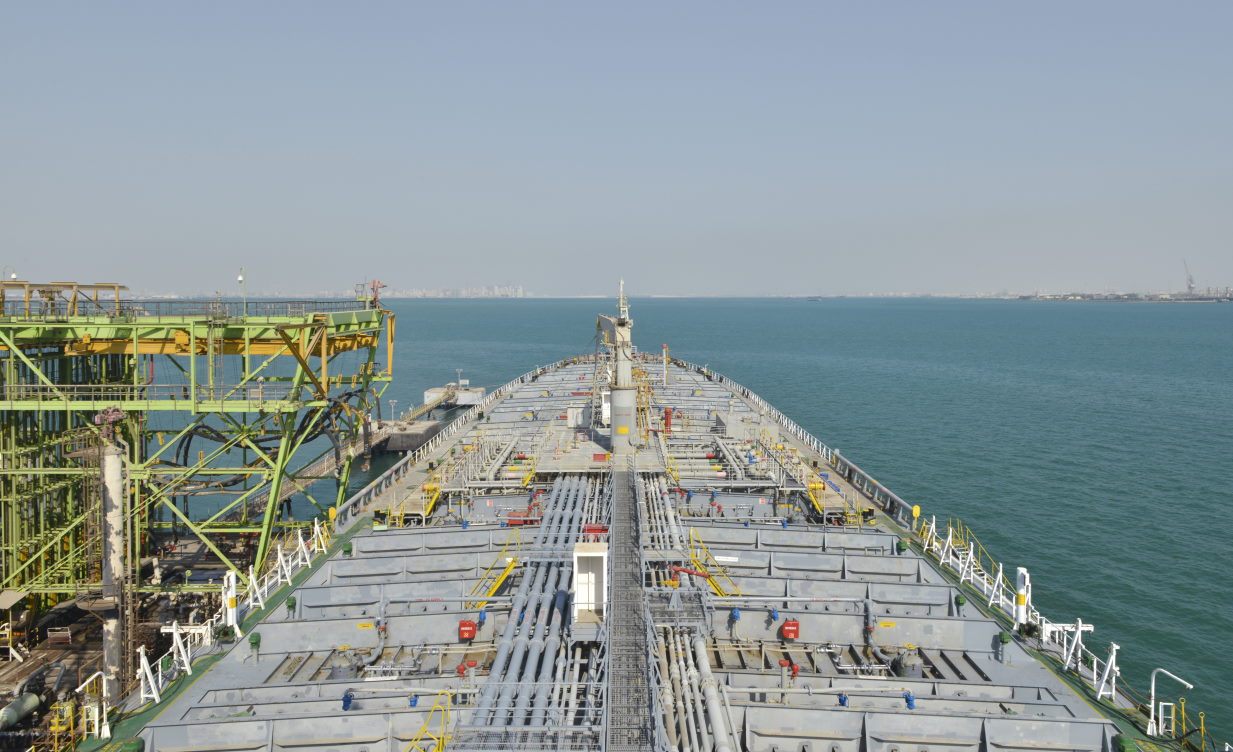
It is worth noting that in previous releases, including the 2022 response to Ukraine, the intervention helped arrest price spikes but did not reverse the underlying supply disruption. Strategic reserves are a pressure valve, not a solution. They buy time for supply to normalize. In this case, supply cannot normalize until the Strait of Hormuz reopens, insurance markets resume coverage, and tanker operators return to Gulf routes. None of those conditions are currently in sight.
Qatar’s energy minister, Saad al-Kaabi, said in a Financial Times interview on Friday that the war could bring down the economies of the world and that Gulf energy exporters would halt production within days if the conflict continued. That is not a diplomatic statement. That is a minister describing the operational reality facing producers whose export infrastructure is under active threat.
Meanwhile, on Truth Social on Sunday, Trump dismissed the concern. Short-term oil prices, he wrote, would drop rapidly once the Iran nuclear threat was eliminated, a small price for global safety and peace.
Stock markets across Asia fell sharply on Monday. US equity futures were pointing to steep losses at the open.
The MENA Angle
For the Gulf states specifically, the strategic reserve release is a signal worth reading carefully — and not only for what it says about oil prices.
The G7 moving to release reserves is an acknowledgement that the conflict has generated a supply shock serious enough to require collective intervention by the world’s wealthiest economies. That is a formal, institutional recognition that the costs being absorbed in the Gulf are now being felt in Washington, Berlin, Tokyo, and Seoul.
This matters for a reason we reported on earlier: Gulf states are currently in internal discussions about reviewing their financial commitments to the United States, including whether force majeure clauses can be invoked on existing contracts. We described that scenario as a possibility being discussed privately. This morning, it became public fact.
Bapco Energies, Bahrain’s national energy company, declared force majeure on its operations, citing the ongoing regional conflict and a direct attack on its refinery complex. This is the first confirmed force majeure declaration by a Gulf energy company since the conflict began. It is not an anonymous briefing. It is a formal legal declaration with immediate commercial consequences for every counterparty holding a contract with Bapco.
Bapco’s statement added that all local market needs remain fully secured. That line is doing significant work, it is a company telling its domestic market not to panic, which means the risk of domestic supply disruption is real enough to require direct reassurance.
Bapco is a relatively small producer. The question the market is now asking is whether this is the first declaration in a series. If Saudi Aramco, ADNOC, or QatarEnergy follow, even partially, the implications move into a different category entirely.
The Gulf states do not need to announce anything further. The declarations are beginning to speak for themselves.
What to Watch
Whether Bapco is the first of many. Bahrain’s national energy company declaring force majeure is significant in itself. It becomes a different order of problem if larger producers follow. Watch for any statement from Saudi Aramco, ADNOC, or QatarEnergy, even a carefully worded one referencing operational disruption or contractual review.
Whether the reserve release actually happens. Three G7 countries have expressed support, according to the FT, but that leaves four who have not. A joint release requires coordination, and the politics of committing strategic stocks to a war one did not choose are not straightforward for every member.
The Trump reversal. Last week, the administration said reserve releases would not be needed. This week it is leading the discussion. That shift is significant; it suggests the domestic political pressure from rising petrol prices is already outweighing the foreign policy optics of appearing to respond to market panic.
China’s position. Beijing is not a full IEA member but holds an estimated 1.1 to 1.4 billion barrels of strategic oil reserves, enough to cover up to 140 days of domestic import demand. If China decides to release stocks in parallel, the price impact is amplified. If it does not, the IEA release becomes partially offset by Chinese buyers stepping in to purchase the discounted barrels. Watch Beijing’s signals over the next 48 hours.
The Hormuz reopening timeline. A reserve release does not fix the supply disruption. It manages the price consequences of it. The underlying problem that a significant share of the world’s oil cannot currently move from producer to buyer remains unchanged until the Strait reopens. Every day it does not, the gap between what a reserve release can achieve and what the market actually needs grows wider.
The G7 is meeting to manage the symptoms. The disease is still running.
If you see something out of place or would like to contribute to this story, check out our Ethics and Policy section.