- Emirates and other airlines face near-empty inbound flights as Iran conflict disrupts regional air travel and reduces passenger confidence sharply.
- Dubai’s aviation hub adapts with cargo operations and network adjustments, while outbound travel remains steady amid heightened operational challenges.
- UAE’s diversified economy and long-term resilience strategies help absorb shocks, though GDP is expected to fall roughly five percent.
Flights
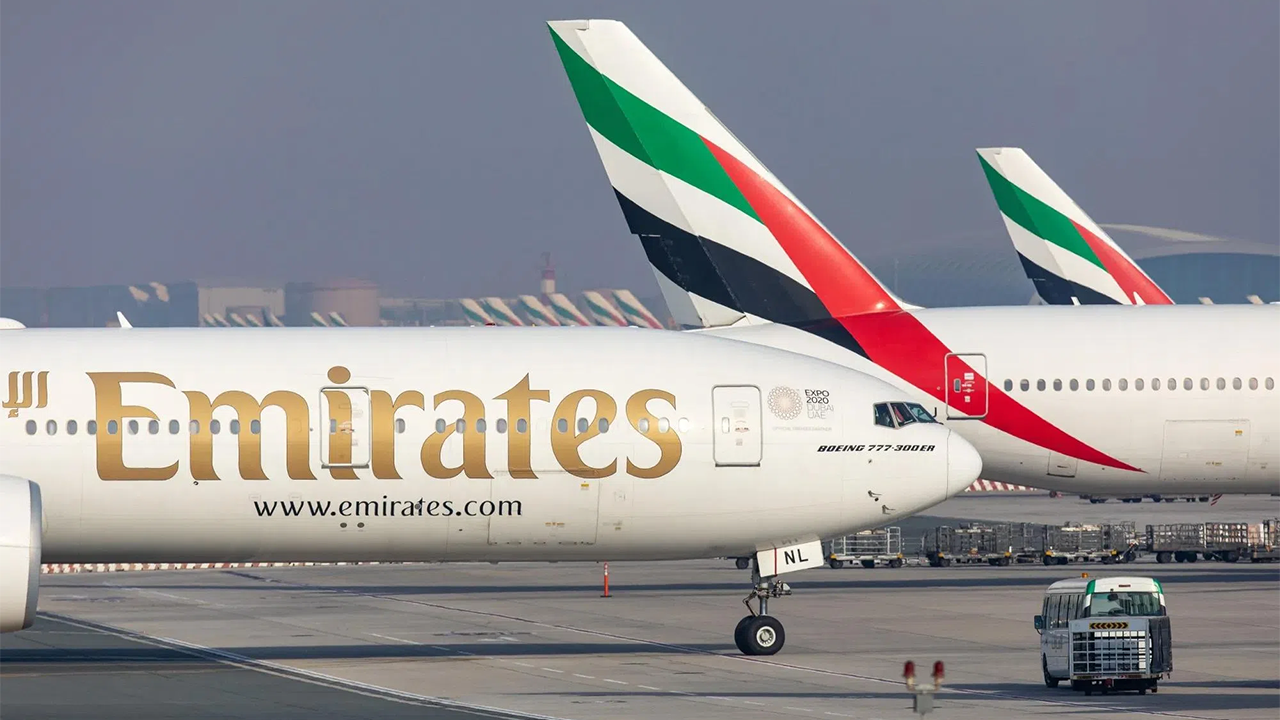
Dubai’s aviation sector is feeling the impact of the ongoing Iran conflict, which has disrupted flights and shaken traveler confidence. Emirates, the UAE’s flagship carrier, has seen a sharp decline in occupancy on flights from major global markets. Aircraft from cities like New York, Prague, and Budapest are returning with as few as 5% to 20% of seats filled. Even high-density Airbus A380 jets, which typically carry nearly 500 passengers, have flown with fewer than 35 people.
Outbound flights from Dubai show a different trend, as residents and business travelers continue to leave the city. Still, the combination of empty inbound flights and thousands of daily no-shows has added operational complexity for the airline. Emirates has offered refunds and flexible rescheduling while adjusting its network to match reduced demand safely.
The airline has also pivoted to cargo operations to offset revenue losses. Boeing 777 planes are favored over Airbus A380s due to better cargo capacity. With the Strait of Hormuz effectively closed, air freight has become a key channel for importing perishable goods and essential supplies. Other regional carriers like Etihad Airways and Qatar Airways have resumed limited operations, but Emirates continues to run the majority of Gulf flights.
Broader Impacts
Dubai’s location between Europe and Asia made its main airport a global hub connecting 291 cities and serving 95 million passengers last year. Among them 19.6 million tourists flocking to Dubai’s hotspots, beaches, and shopping malls.
Bloomberg reports that the UAE can withstand the halt in oil flows given their ability to re-route some oil flows away from the critical Hormuz waterway. However, it predicts that the nation’s GDP will drop by about 5%.
The UAE’s diversified economy , spanning finance, logistics, and technology, is mitigating some risk, but uncertainty persists. The UAE Minister of State Lana Nusseibeh in an interview with Euronews emphasized that the country has invested heavily in economic resilience, logistics networks and supply chain security. Moreover, the minister indicates this long-term strategy and that the country’s development model is built to withstand such geopolitical shocks.
If you see something out of place or would like to contribute to this story, check out our Ethics and Policy section.