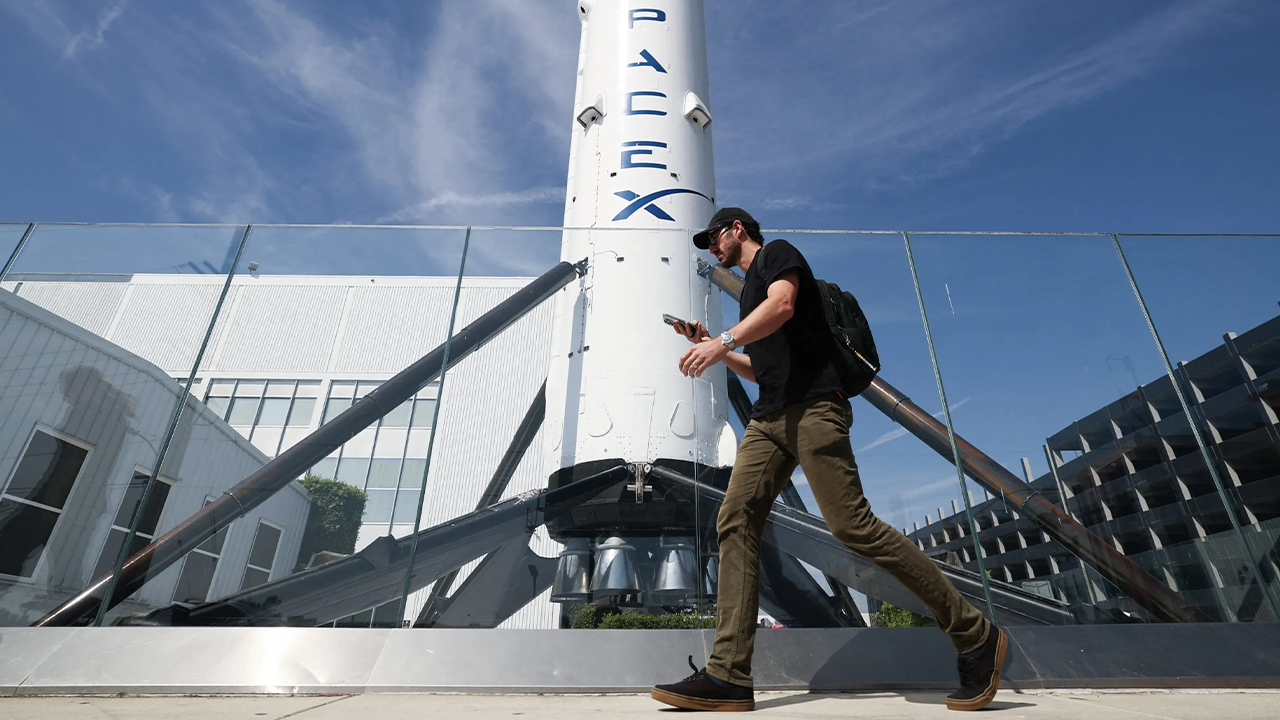
The company has confidentially filed for a public debut that could value it at over USD 1.75 trillion, setting the tone for a new wave of tech listings.
SpaceX is preparing to open itself to public markets in what could become the largest IPO in history.
Why You Should Care
This is not just another listing. It is a reset moment for global capital markets.
If SpaceX reaches its projected size, it would surpass Saudi Aramco’s USD 29 billion IPO in 2019, which still holds the title of the largest public offering ever.
That matters because it signals a shift in what the market rewards. A company built on rockets, satellites, and AI infrastructure could become the most valuable listing in history, redefining what “scale” looks like in public markets.
For investors, operators, and builders, the takeaway is clear: the next generation of market leaders will not be pure software companies. They will be infrastructure platforms that control critical systems, from connectivity to compute.
The Details
SpaceX has confidentially submitted its IPO filing to the US Securities and Exchange Commission, putting it on track for a potential listing as early as June.
The company is reportedly targeting a valuation north of USD 1.75 trillion, following its merger with Musk’s AI venture xAI, which valued the combined entity at approximately USD 1.25 trillion.
At that scale, the offering could raise between USD 50 billion and USD 75 billion, making it the largest IPO ever recorded.
What underpins that valuation is not just rockets.
SpaceX’s Starlink satellite network, now serving millions of users globally, is emerging as its core revenue engine, supported by defense contracts, recurring subscriptions, and its expanding role in global connectivity.
At the same time, the company is positioning itself deeper into the AI infrastructure stack. Its integration with xAI and ambitions around orbital data centers point to a future where computing, connectivity, and space infrastructure converge.
The IPO is also expected to include a dual-class share structure, allowing insiders to retain control while accessing public capital, a model increasingly common among founder-led tech giants
The Ripple
SpaceX’s move is likely to unlock a broader reopening of the IPO market.
A successful debut could accelerate listings from other high-profile AI companies, including OpenAI and Anthropic, effectively creating a pipeline of mega-IPOs tied to artificial intelligence.
It also reframes the competitive landscape. Space is no longer a niche industry. It is becoming an important layer of global infrastructure, tied to defense, communications, and now computing. Governments are leaning more heavily on private players, while capital is following that shift.
The result is a new category of companies that sit between sovereign capability and commercial scale.
What to Watch
The key question is not whether the IPO happens. It is whether investors buy into a USD 1.75 trillion narrative built on space infrastructure and AI.
SpaceX is profitable, operationally dominant, and technologically ahead. But its valuation ultimately depends on how much investors are willing to buy into a future where space infrastructure and AI are tightly integrated.
If demand holds, this will not just be the biggest IPO ever. It will mark the beginning of a new benchmark for what the market considers a “core” technology company.
If you see something out of place or would like to contribute to this story, check out our Ethics and Policy section.