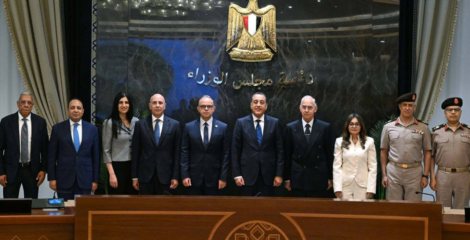
The agreements resolve decades-old financial entanglements between the National Investment Bank and government entities. This aims to help restore financial balance and ease pressure on the state budget.
Egypt has signed two framework agreements to settle longstanding financial obligations with the National Investment Bank (NIB) and several government entities. It marks one of the country’s largest financial restructuring efforts in decades.
The agreements cover around USD 3.8 billion (EGP 196B) in financial settlements, some linked to obligations dating back to the 1980s. This is part of a broader effort to resolve historic financial entanglements across state institutions and strengthen public finances.
Why You Should Care
The settlements represent more than an accounting exercise. They are part of Egypt’s ongoing efforts to streamline financial relationships between government entities, improve the financial standing of public institutions, and reduce pressure on the state budget.
According to the agreements, EGP 62.2 billion in obligations owed to the National Investment Bank by subsidiaries of the Holding Company for Water and Wastewater will be settled.
A further EGP 133.5 billion relates to obligations owed by the General Authority for Reconstruction Projects and Agricultural Development (GARPAD). Additionally, the Egyptian Agricultural Authority will settle EGP 306 million in obligations as of March 2025.
The settlements intend to restore financial balance across national entities, improve the management of state-owned assets, and support the efficient allocation of resources.
The agreements are described as a strong step in Egypt’s structural reform agenda. Furthermore, resolving financial entanglements will help improve financing structures and strengthen the performance of state entities. It will also support sustainable development goals.
The Ripple
The settlements cover sectors that sit at the center of Egypt’s infrastructure and development priorities, including water, sanitation, agriculture, and land development.
By addressing longstanding financial obligations, the government aims to improve the financial positions of entities operating in these sectors and enhance their ability to carry out development and investment plans.
For instance, the agreement involving water and wastewater companies supports financial discipline and more efficient management of state-owned resources. Moreover, improving the financial standing of these companies can strengthen their ability to maintain and develop critical public services.
Additionally, the settlements contribute to macroeconomic stability and make better use of state resources and assets.
What to Watch
The latest agreements are part of a wider government effort to close longstanding financial files that have accumulated across public institutions over decades. Moreover, discussions are continuing to resolve remaining financial entanglements involving other government entities.
For policymakers, the initiative represents another step in restructuring financial relationships within the public sector.
For investors and businesses, it signals the government’s continued focus on improving financial governance, asset management, and institutional efficiency across key sectors of the economy.
If you see something out of place or would like to contribute to this story, check out our Ethics and Policy section.