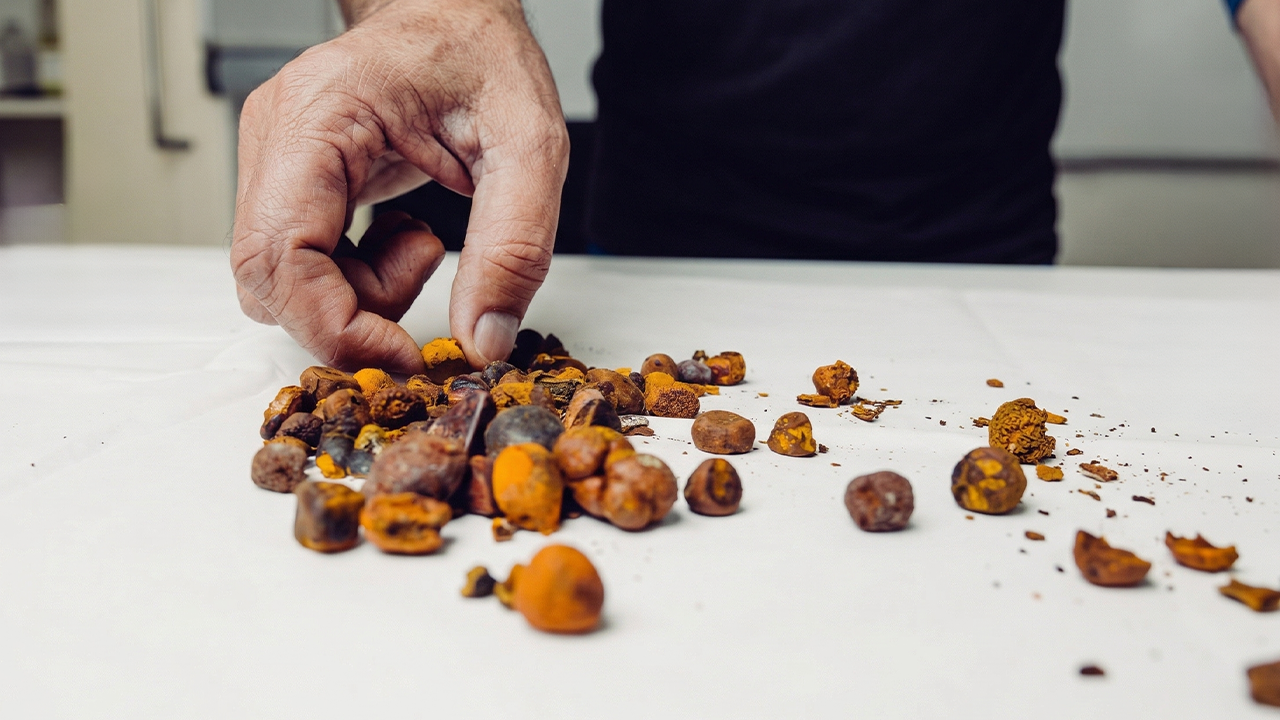
- Cow gallstones, used in traditional Chinese medicine, have surged past gold due to rising global health demand.
- Scarcity from younger slaughter ages fuels prices and drives a growing black market internationally.
- Lab-grown alternatives exist, but natural stones remain the preferred standard in medical treatments.
Cow Gallstones
A commodity so strange it sounds fake: cow gallstones now sell for more than gold.
Cow gallstones, tiny stones formed in cows’ gallbladders, have become one of the world’s most valuable commodities. In 2025, prices reached around USD 5,800 per ounce, surpassing gold. The surge is driven by strong demand in China, where gallstones are a key ingredient in traditional medicines.
These stones are used to treat serious conditions such as strokes, high blood pressure, and heart disease. With stroke rates in China currently three times higher than in the United States, demand is skyrocketing. Popular remedies, including Angong Niuhuang Wan, rely on these stones for effectiveness.
High Demand, Limited Supply
Supply is extremely limited. The stones only form in older cows, while modern farms slaughter animals younger to maximize meat production. This scarcity has opened the door for a lucrative black market. In Brazil, armed gangs raid farms to extract gallstones. Slaughterhouse workers have also been caught hiding and selling stones privately. Australia and Texas have reported similar incidents.
Chinese researchers have developed lab-grown gallstones to address shortages. Despite this, natural stones remain the “gold standard” for traditional medicine. Their rarity, combined with medical significance, keeps prices high and demand strong.
The market is further complicated by reports of human gallstones entering some channels, with individual stones fetching over USD 1,200 depending on size and purity. Online listings highlight both ethical and legal concerns.
If you see something out of place or would like to contribute to this story, check out our Ethics and Policy section.