Fresh capital and expanded commitments position Lucid at the center of the global autonomous mobility race
Lucid is not just raising capital. It is locking in demand.
Lucid Group has secured a combined USD 750 million in new and expanded investments from Saudi Arabia’s Public Investment Fund (PIF) and Uber. Simultaneously, it is also significantly scaling its robotaxi partnership with Uber to at least 35,000 vehicles globally.
Why You Should Care
This is not a typical funding announcement. It is a coordinated capital and demand strategy.
For Lucid, the combination of fresh investment and a large-scale vehicle commitment reduces one of the biggest risks facing EV manufacturers: uncertain future demand. For Uber, it accelerates its transition from a ride-hailing platform to a full-scale autonomous mobility network.
On a regional basis, PIF’s continued backing signals a long-term position in next-generation transportation infrastructure, not just automotive manufacturing.
Lucid will receive a USD550 million investment from Ayar Third Investment Company, an affiliate of PIF, alongside an additional USD 200 million commitment from Uber, bringing Uber’s total investment in the company to USD 500 million.
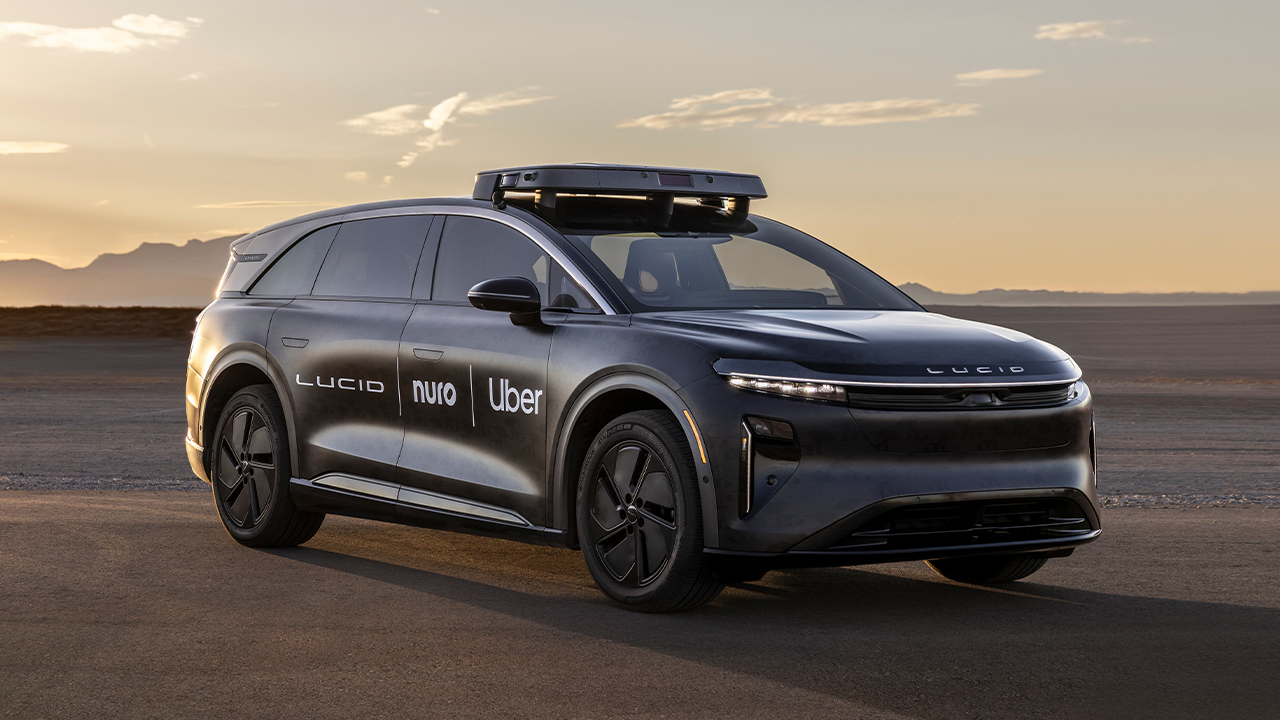
At the same time, Uber has expanded its purchase agreement to at least 35,000 Lucid vehicles, purpose-built for its future global robotaxi service. These vehicles will include the Lucid Gravity SUV and the upcoming midsize platform, which is designed to deliver a competitive range with smaller battery packs and lower production costs.
The partnership builds on earlier collaboration between Lucid, Uber, and autonomous driving company Nuro. Moreover, commercial robotaxi operations are expected to begin in the San Francisco Bay Area later this year. Autonomous testing is already underway, and Lucid has completed delivery of initial test vehicles.
Lucid’s midsize platform, expected to be priced under USD 50,000, plays a critical role in this strategy. By combining lower cost with high performance and efficiency, the platform is positioned to support both consumer adoption and large-scale fleet deployment, a key requirement for viable robotaxi economics.
The Ripple
This move extends beyond Lucid and Uber.
For EV manufacturers, it highlights a shift toward vertically integrated partnerships where capital, production, and end-use demand are aligned early. For autonomous mobility players, it reinforces that scaling robotaxi networks will depend as much on vehicle economics as on software.
Meanwhile, for PIF, the investment continues to build exposure across the full mobility stack, from manufacturing to future transport platforms. Additionally, it aligns with broader ambitions to position Saudi Arabia as a hub for advanced industries.
What to Watch
The next phase is execution at scale.
The key signal will be how quickly Lucid and its partners move from testing to commercial deployment, and whether the economics of the midsize platform deliver on expectations for fleet operators.
At the same time, the size of this vehicle commitment suggests that early winners in the robotaxi space may be defined not just by technology, but by their ability to secure long-term supply, capital backing, and global deployment partners in parallel.
If you see something out of place or would like to contribute to this story, check out our Ethics and Policy section.