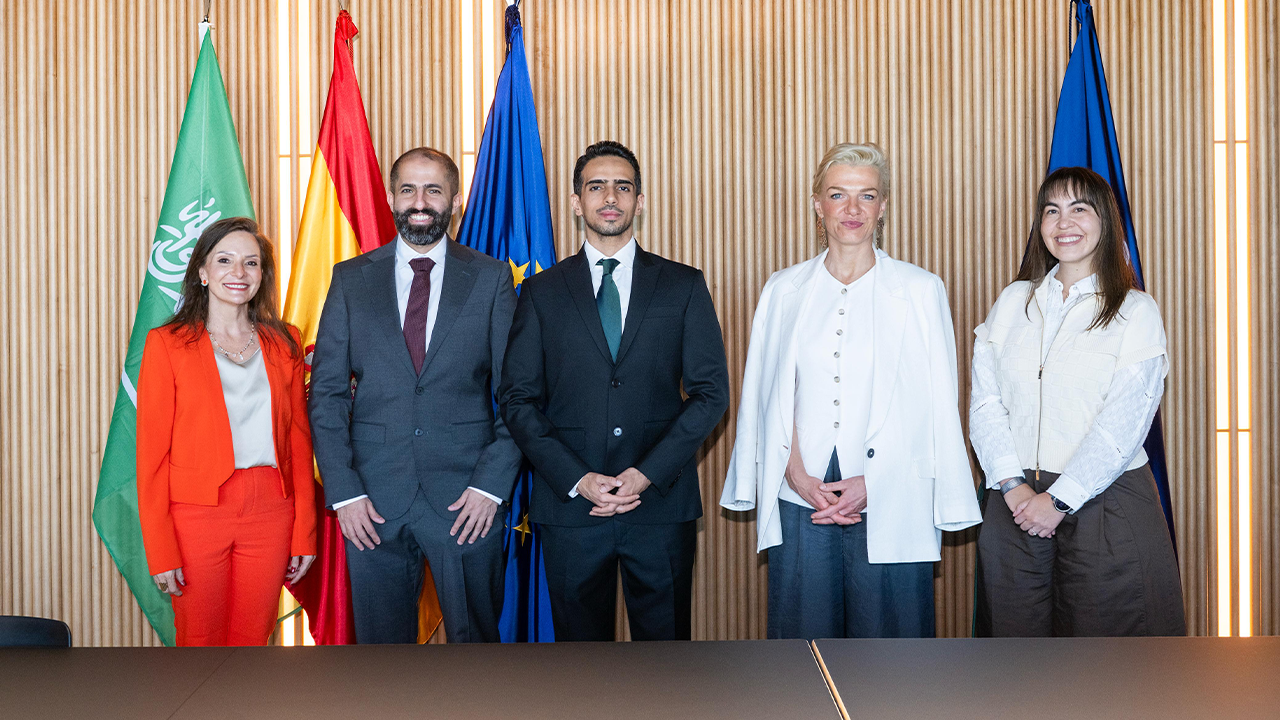
Tarmeez Capital, a Saudi AI-powered fintech firm licensed by the Capital Market Authority, has signed a strategic agreement with IE University in Madrid. The partnership covers artificial intelligence research, fintech curriculum development, talent recruitment, and joint events, including a hackathon planned for October. It is the first formal institutional agreement of its kind between a Saudi fintech company and a top European university.
Saudi Arabia’s financial sector has a talent problem that capital alone cannot solve. The Kingdom has committed to building a knowledge-based economy under Vision 2030. It has invested heavily in financial infrastructure, regulatory reform, and the digitization of capital markets. What it has not yet solved is the pipeline. Producing and retaining the engineers, data scientists, and fintech operators that an AI-driven financial system requires at scale is a different challenge entirely.
The Tarmeez Capital and IE University agreement is one answer to that problem. It is also a signal about where Saudi fintech companies are looking for solutions. Not domestically, and not toward the Gulf’s existing academic infrastructure. Toward Europe.
Why You Should Care
The agreement covers more ground than most institutional partnerships of this type. Tarmeez Capital and IE University will co-develop curriculum content and produce joint research on fintech scaling across markets. They will also establish a direct recruitment pipeline for IE graduates into the Saudi market through career portal integration. A hackathon co-organized with IE Foundation and IE School of Science and Technology is already confirmed for October.
For Saudi Arabia’s fintech ecosystem, the most consequential element is the recruitment pipeline. IE University has a global alumni network of over 84,000 people across 185 countries. Its student body draws from 160 countries. A structured integration between that network and Tarmeez Capital’s talent acquisition creates access to internationally trained fintech and data science graduates. The domestic Saudi market cannot yet produce that pool at the same scale or diversity.
The research dimension matters too. Joint papers and thought leadership on fintech scaling across the MENA region give Tarmeez Capital something most firms in the category do not have. Academic credibility in a sector where trust is a critical commercial asset. For a company building AI-backed infrastructure for private debt markets and Sukuk issuance, that credibility has direct commercial value.
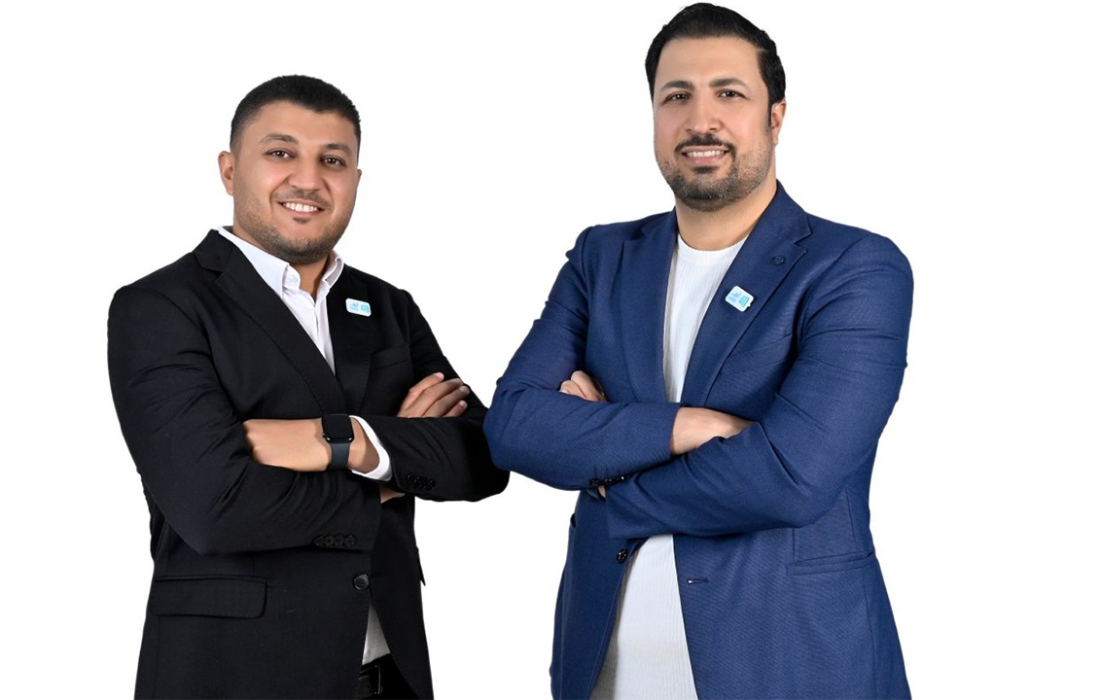
Salem Al Jawini, Co-Founder and Chief Strategy Officer of Tarmeez Capital and an IE alumnus, framed the rationale clearly. He pointed to IE’s expertise in innovation, entrepreneurship, and data science as a direct complement to what Tarmeez is building in Saudi Arabia’s financial ecosystem. Al Jawini completed his MBA at IE in 2015. The institutional partnership formalizes a relationship that was already personal.
The Ripple
The Tarmeez Capital and IE University agreement is not an isolated event. It reflects a pattern becoming visible across the Gulf’s most ambitious companies. Building world-class capability requires reaching into world-class institutions. Those institutions are increasingly willing to engage.
IE University’s Vice President of Global Alumni and Talent, Ines Drieselmann, was direct about the timing. She described Saudi Arabia as a country not preparing for transformation but already inside it. IE, she said, wanted to be part of that conversation now rather than in two years. That framing matters. A European institution of IE’s caliber formalizing a presence in the Saudi market signals something about where European universities believe their most significant future partnerships will come from.
For Tarmeez Capital specifically, the agreement advances a thesis the firm has been building toward. The company has facilitated more than SAR 3.5 billion in financing programs across 12 sectors. It uses AI-backed infrastructure to digitize underwriting, credit risk assessment, and Sukuk issuance workflows. The institutional partnership with IE strengthens its position as a company building financial infrastructure for the long term, not simply processing transactions.
For Saudi fintech more broadly, the partnership opens a question worth watching. If Tarmeez can formalize a relationship with a top European university, what does that unlock for the sector’s ability to attract international talent and academic credibility? The first mover advantage in this category is real.
What to Watch
The October hackathon is the first concrete deliverable of the partnership and the first indicator of whether the collaboration produces genuine output or stays at the level of announcement. Hackathons organized by financial firms and academic institutions vary enormously in quality and impact. The involvement of IE Foundation and the IE School of Science and Technology suggests serious institutional commitment on the university side. Whether the format produces ideas that connect to Tarmeez Capital’s actual operational challenges will be the measure of its value.
The recruitment pipeline is the longer-term indicator. Formal career portal integration between IE University and Tarmeez Capital is a structural commitment, not a one-time event. The volume and quality of graduates moving through that pipeline over the next two to three years will be the real measure of whether the agreement delivers.
If you see something out of place or would like to contribute to this story, check out our Ethics and Policy section.