The Gulf is not just reacting to disruption in the Strait of Hormuz. It is building the infrastructure to move beyond it.
Why You Should Care
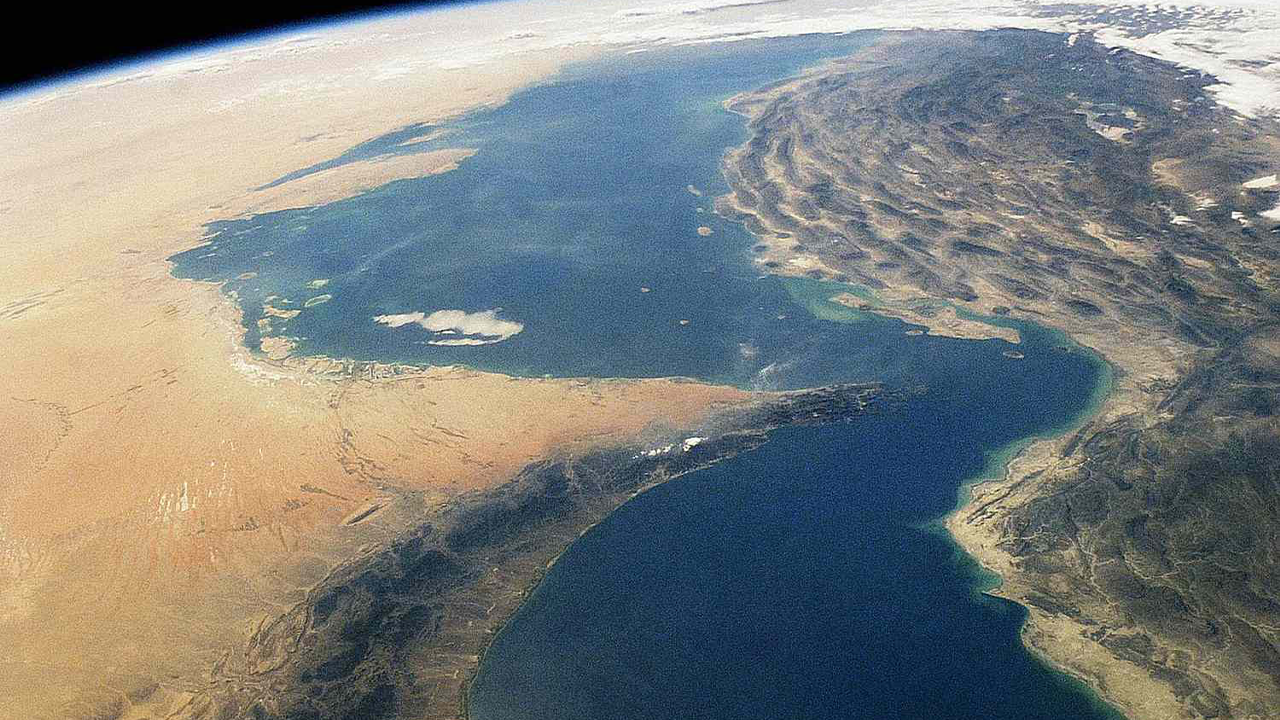
For decades, the Strait of Hormuz has been one of the world’s most critical trade chokepoints, carrying roughly a fifth of global seaborne oil and a significant share of goods flowing into Gulf economies. What is changing now is not just the level of risk, but how the region is responding to it.
Across the Gulf, governments and companies are accelerating investments in rail, road, and alternative maritime corridors. What began as a contingency is increasingly taking shape as a long-term logistics strategy. A strategy that prioritizes flexibility, redundancy, and control over how goods move across the region.
The Details
The shift is visible across multiple layers of infrastructure and operations, all moving in the same direction.
The UAE and Jordan have signed a USD 2.3 billion agreement to build a 360-kilometer railway. It aims to link Jordan’s mining hubs in Al Shidiya and Ghor Al Safi to Aqaba Port. The line is expected to transport up to 16 million tons of phosphate and potash annually. Thus, it creates a direct export route that bypasses traditional Gulf shipping dependencies. The project also sits within a broader UAE-Jordan economic partnership targeting USD 8 billion in bilateral trade within the next six years.
At the same time, land freight is already stepping in to fill immediate gaps. UAE-based Trukker reported a 30% increase in shipments in March and deployed more than 500 trucks to maintain the flow of goods ranging from petrochemicals to consumer products. Global logistics players, including Hapag-Lloyd and Maersk have also begun building land-based routes across Saudi Arabia and Oman. Meanwhile, ports on the Red Sea and Arabian Sea, including Jeddah, Salalah, and Sohar, are taking on a larger share of regional trade flows.
Saudi Arabia is positioning itself at the center of this transition. NEOM is promoting a trade corridor linking Europe, Egypt, NEOM, and the Gulf, combining ferries and trucking to move time-sensitive goods more quickly. According to NEOM, the route is already being used by European importers to access markets such as the UAE, Kuwait, Iraq, and Oman.
In parallel, Saudi Arabia Railways has expanded its freight network, strengthening connections between the Kingdom’s eastern and western coasts. The goal is not just to reroute trade, but to create a system where goods can move across multiple pathways depending on cost, speed, and risk.
Taken together, these developments point to a broader redesign of how trade moves through the region. Rail networks, trucking corridors, and Red Sea gateways are no longer secondary options. They are becoming part of a more distributed logistics architecture.
The Ripple
The implications extend well beyond the transport sector.
For ports along the Red Sea and Arabian Sea, this shift is creating new relevance. As trade diversifies away from a single maritime corridor, ports like Jeddah, Salalah, and Sohar are positioned to capture sustained increases in volume, not just temporary spillover.
For infrastructure investors, the opportunity is becoming clearer. Railways, cross-border logistics platforms, and port connectivity projects are no longer just about efficiency. They are about resilience, making them central to how capital is deployed across the region’s next phase of development.
For regional economies, the shift is also deepening integration. Jordan gains a stronger export role through Aqaba, Egypt becomes more embedded through Red Sea links, and Saudi Arabia strengthens its position as a land bridge connecting multiple trade routes.
The result is a more interconnected system where trade flows are less dependent on a single geography and more distributed across multiple corridors.
What to Watch
The key question is whether these alternative routes remain reactive solutions or evolve into permanent trade infrastructure.
If current investments continue to scale, the Gulf could move toward a logistics model built on optionality rather than dependence. Rail, road, and hybrid sea-land corridors would not replace the Strait of Hormuz, but they would reduce the cost of relying on it too heavily.
That shift would carry long-term implications. It would give exporters more control over how goods reach markets, allow logistics players to optimize routes dynamically, and position the region as a more resilient hub within global trade networks.
The Strait of Hormuz will remain important. But the more routes the Gulf builds around it, the less it defines the limits of the region’s trade.
If you see something out of place or would like to contribute to this story, check out our Ethics and Policy section.