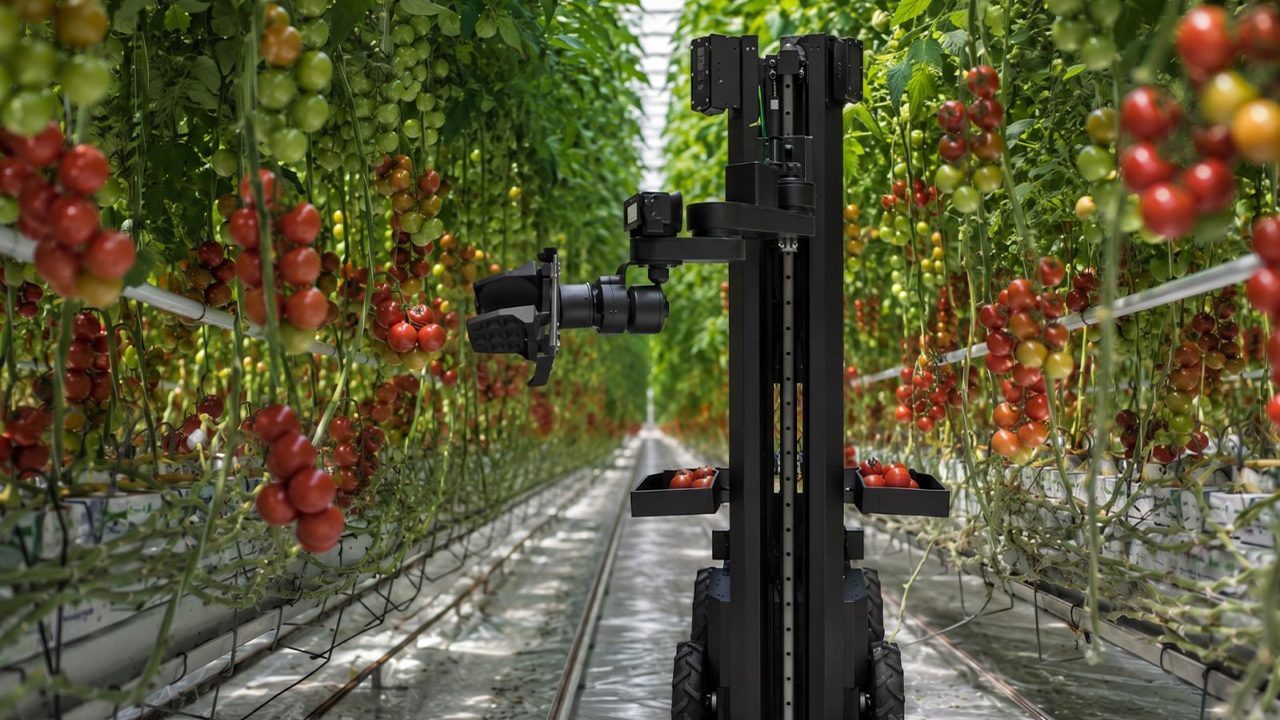
Egrobots, an Egyptian deep technology company specializing in autonomous systems and robotics, has launched the first autonomous agricultural harvesting robot designed and built entirely by Egyptian engineers. The robot uses computer vision, artificial intelligence, and autonomous navigation to identify ripe crops, plot efficient farm paths, and execute harvesting tasks with minimal human intervention. It operates at approximately 160 kilograms per hour, around the clock.
Egypt’s agricultural sector employs roughly a quarter of the country’s workforce. It also faces a structural challenge that has been building for years, however. Seasonal labor shortages, rising operational costs, and the difficulty of scaling farm productivity without proportionally scaling headcount have all intensified. Crucially, those pressures are not unique to Egypt. Indeed, they are driving a global shift toward autonomous agricultural systems that has already transformed farming economics in the United States, Japan, and parts of Europe.
What makes the Egrobots announcement significant, however, is not just that an autonomous harvesting robot now exists in Egypt. It is that Egyptian engineers built it from the ground up.
Why You Should Care
The Arab world’s technology ecosystem has developed in two broad phases. The first was adoption. In the first phase, regional companies and governments began using software, applications, and platforms built elsewhere, adapting them to local contexts. The second phase, which is only beginning, involves building the underlying technology itself. The second phase is more demanding. Deep technology, including physical AI, autonomous systems, robotics, and advanced manufacturing, requires a different order of capability than application development. Specifically, it requires hardware expertise, systems integration, and the kind of accumulated technical knowledge that takes years to build.
Egrobots is backed by a team with over 50 years of collective experience in robotics and industrial systems. Notably, its founders previously worked with the Egyptian Ministry of Interior on a traffic management robot. The company is a graduate of the Google for Startups program and a member of NVIDIA’s Inception program. These are not incidental credentials, however. They signal a company that has operated within global deep technology networks while building domestically.
The harvesting robot, therefore, represents the most visible output of that trajectory. A system capable of running four robotic arms simultaneously, operating continuously, and achieving meaningful productivity rates in real agricultural conditions is not a prototype built for a demonstration. It is, in fact, a functional product addressing a real operational problem.
For Egypt’s startup ecosystem, that distinction matters enormously. Consequently, proof that Egyptian engineers can design, build, and deploy deep technology at this level of complexity changes the conversation about what is possible domestically.
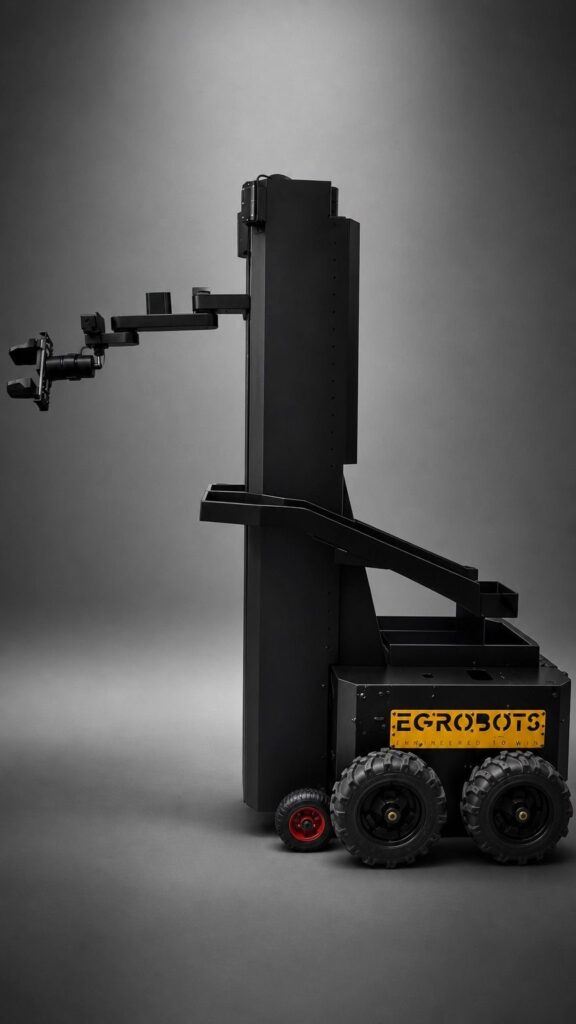
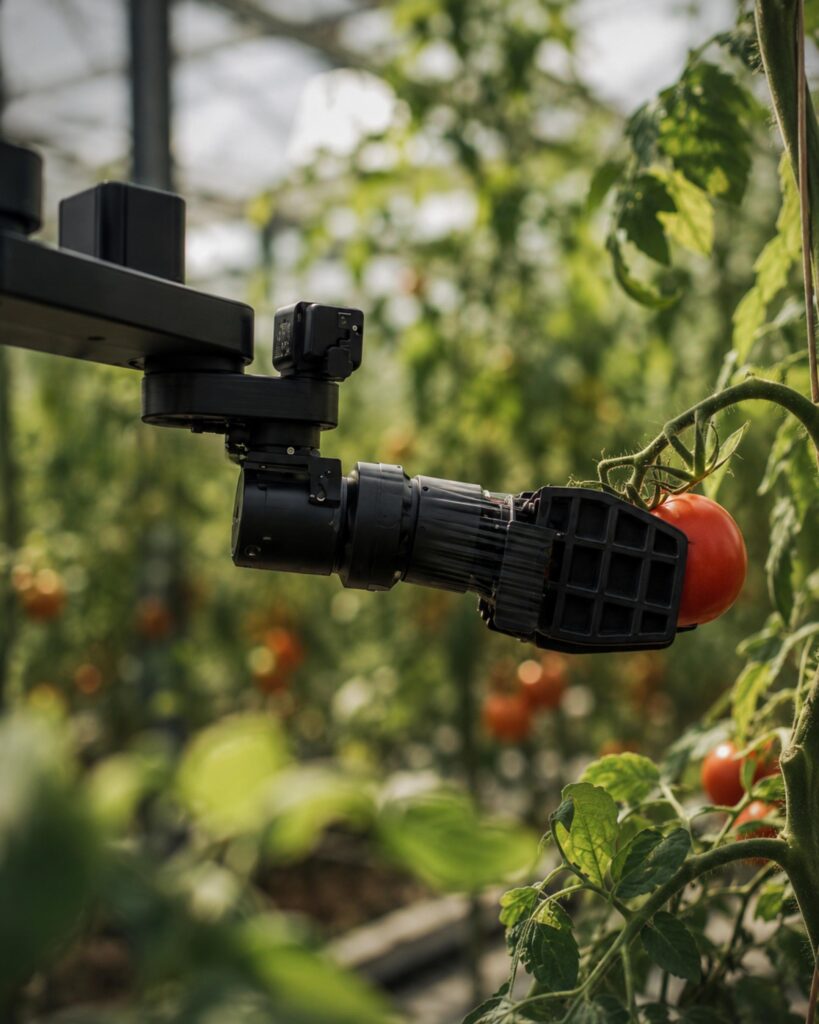
The robot’s technical architecture reflects the specific demands of agricultural automation. Specifically, computer vision identifies ripe crops with sufficient reliability to reduce waste and improve yield quality. Autonomous navigation handles path optimization within farm environments, which are less structured and more variable than factory floors. Together, the four-arm configuration and continuous operational capacity address the seasonal labor shortage directly. A robot that does not need rest, does not require seasonal recruitment, and maintains consistent output through harvest periods eliminates a category of risk the conventional labor model cannot solve.
That last point is worth dwelling on. In fact, agricultural labor shortages in Egypt are not simply a cost problem. They are a reliability problem. Harvest windows are time-sensitive. A crop ready to pick today, for example, may be damaged or lost within days. Moreover, labor that does not show up in the right numbers at the right moment has consequences that compound quickly. An autonomous system that operates continuously throughout the harvest window eliminates a category of risk that has no clean solution in the conventional labor model.
The Ripple
Egrobots is not the only company working on agricultural robotics globally. It is, however, among a very small number doing so with this level of technical depth from within the Arab world. The announcement is relevant to three distinct audiences beyond the agricultural sector itself.
For Egypt’s technology investment community, the robot validates deep technology as a viable investment category domestically. Notably, physical AI and autonomous systems require longer development timelines and higher capital intensity than software. As a result, investors who have stayed away from hardware-intensive bets may reassess that position as proof of concept accumulates.
For regional governments pursuing agricultural modernization and food security objectives, a locally built autonomous harvesting system offers something imported technology does not. In particular, it enables local customisation, local maintenance, and local knowledge transfer. The Egyptian government’s broader digital transformation agenda and Vision 2030’s automation goals create a policy environment that is actively receptive to this kind of development.
For the wider Arab technology ecosystem, the announcement adds to a small but growing body of evidence. The region is capable of producing deep technology, not just deploying it. Furthermore, each example makes the next one more credible and more fundable.
What to Watch
Egrobots has demonstrated the robot works. The next question, however, is whether it scales commercially. Agricultural technology products face a specific adoption challenge: farmers and agricultural operators are risk-averse buyers who require proven reliability before committing to new systems. Therefore, pilot programs within Egyptian farms and demonstrable yield data will be the critical commercial assets the company needs to build in the near term.
The company is also working on humanoid robotics and manufacturing sector solutions. That expansion into adjacent categories is logical given the underlying technology stack, but it carries execution risk. Deep technology companies that spread across too many verticals too quickly before achieving commercial scale in any single one face a well-documented trap. Ultimately, the harvesting robot’s commercial trajectory will be the indicator to watch.
Egrobots has the credentials, the technical foundation, and the timing. Above all, whether it converts this milestone into a scalable business at the intersection of Egypt’s agricultural challenges and deep technology ambitions is the most important question for the next twelve months.
This article is based on information provided in Egrobots’ official announcement.
If you see something out of place or would like to contribute to this story, check out our Ethics and Policy section.