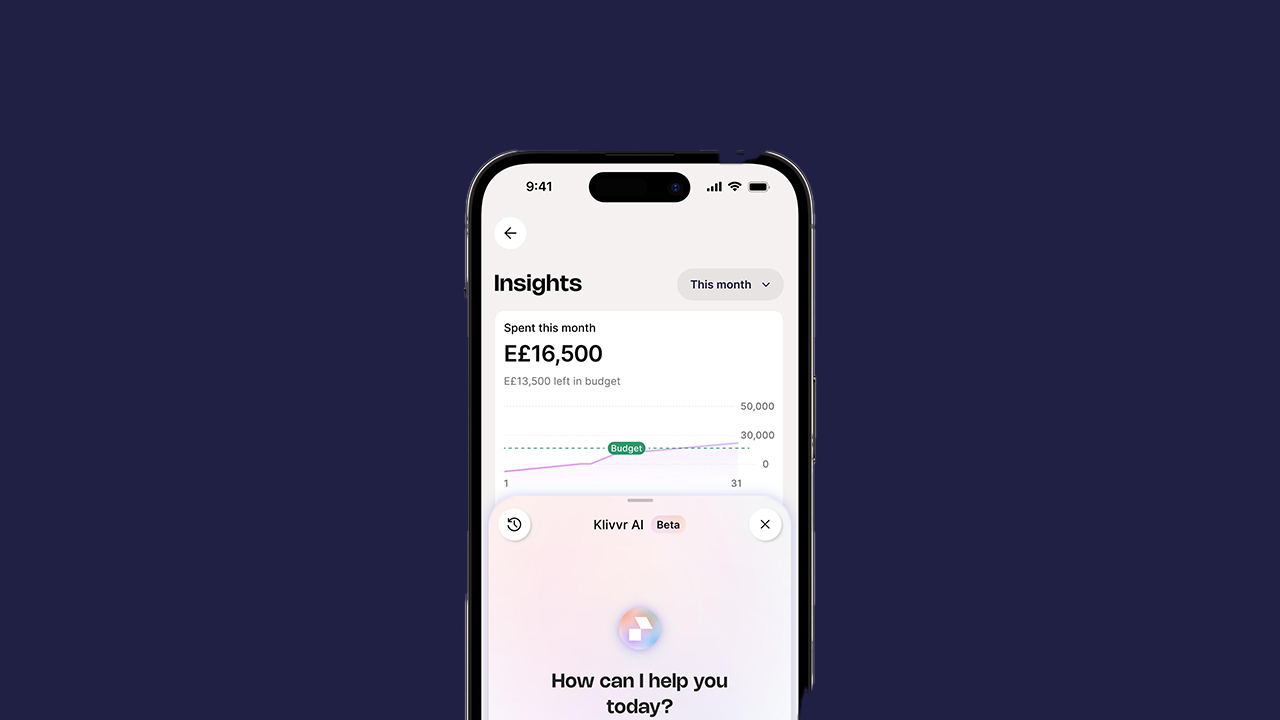
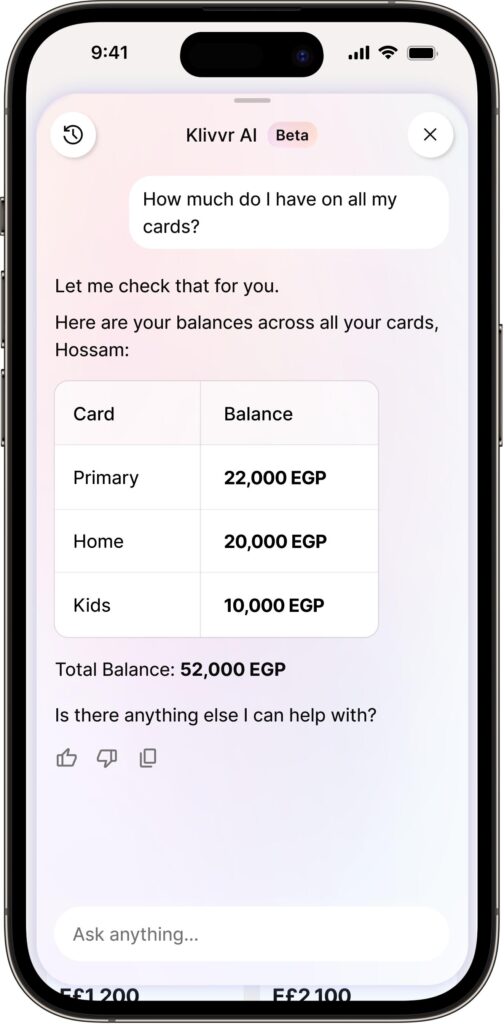
Klivvr has launched K•ai, an interactive AI financial assistant built directly into its fintech application. K•ai allows users to ask questions about their spending, track expenses, search for product offers, and calculate installment values. All of this happens through a conversational interface rather than static dashboards. The launch makes Klivvr the first financial application in Egypt to offer an integrated, interactive AI experience within a commercial fintech product. The company has invested more than $10 million in technology development since its launch and now serves more than 700,000 users.
Egypt’s fintech sector has grown rapidly over the past five years. The number of licensed digital financial services companies has expanded. Mobile payment volumes have increased. Regulatory clarity from the Central Bank of Egypt has attracted capital and accelerated product development. What has not kept pace with that growth is the quality of the user experience. Most Egyptian fintech applications still present financial information as data: charts, numbers, transaction lists, balance figures. They show users what happened. They do not help users understand what it means or what to do about it.
K•ai is Klivvr’s answer to that gap.
Why You Should Care
The distinction between displaying financial data and enabling financial understanding is more significant than it might appear. Studies of personal finance behavior consistently show that access to information alone does not change how people manage money. What changes behavior is understanding, and understanding requires context, comparison, and the ability to ask follow-up questions. A static dashboard provides none of those things.
K•ai replaces the dashboard interaction model with a conversational one. Instead of navigating menus to find a transaction or calculate an installment, a user asks a question in natural language and receives a response. The assistant understands spending patterns, surfaces relevant offers, and provides instant visibility into account activity. It adapts to individual users rather than presenting a standardized interface to everyone.
For Egypt’s fintech market, the significance is structural. But the relevant frame is not regional. It is global. Just one month ago, Revolut launched AIR, its in-app AI financial assistant, rolling it out to 13 million UK customers on April 9, 2026. Revolut, valued at $75 billion with over 70 million global customers, described AIR as a fundamental shift from traditional app navigation to dialogue-based interaction. The assistant covers spending insights, investment tracking, subscription management, and card controls through a single conversational interface. What makes K•ai comparable in ambition and architecture, and notable on a global level, is that Klivvr has built the same integrated approach across a full-stack fintech product spanning payments, BNPL, family banking, and a marketplace. Revolut’s AIR operates under a zero data retention policy and can only access information the customer already sees in their app. K•ai operates on the same principle. Standalone chatbots are common. Integrated intelligence across a complete financial ecosystem is not.
Nils Bachtler, Co-Founder and CEO of Klivvr, described the company’s focus as building products whose use blends naturally into people’s daily lives. He noted that K•ai makes access to financial information and decision-making faster and easier in a way that aligns with the digital generation’s lifestyle.
Omar Sherif, Co-Founder and CTO of Klivvr, framed K•ai as the product of a company built as data-driven from its founding. He described the assistant as giving customers the ability to ask questions, understand their finances more clearly, and get instant account visibility whenever they need it.
Klivvr has built K•ai on top of a product platform that has expanded significantly since the company received Central Bank of Egypt approval in 2023. In 2024, the company launched Klivvr Family, Egypt’s first family banking product. It enables users to manage household spending through a single account with up to five individual cards. In 2025, Klivvr entered consumer finance through a BNPL offering, providing financing of up to EGP 500,000 across installment plans of up to 60 months, in partnership with more than 300 merchants. In 2026, the company added a loyalty program and K.Shop, an in-app marketplace. K•ai is the intelligence layer being built on top of that product stack.
That sequencing matters. K•ai is not a standalone chatbot. It is an AI layer with access to a user’s full financial picture across payments, lending, family accounts, and marketplace activity. That breadth of data access is what makes the conversational capability meaningful. A financial assistant with access to one data source can answer narrow questions. One with access to the full picture can help users make better decisions across their financial lives.
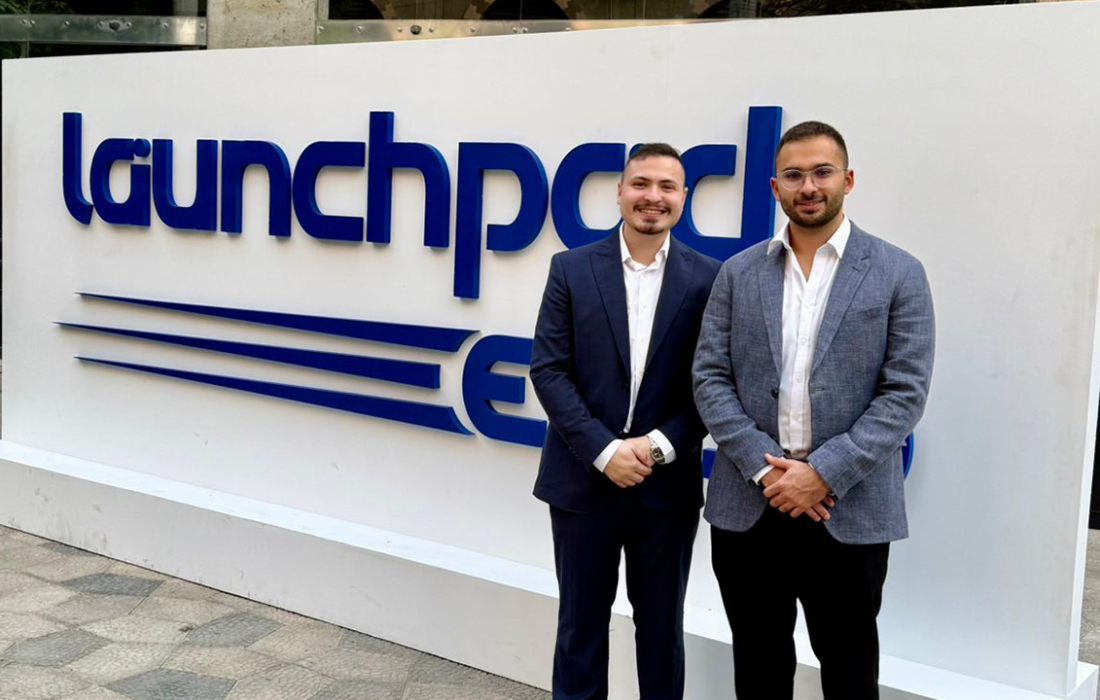
Onsi Sawiris, Co-Founder of Klivvr, was direct about the ambition. He described K•ai as giving Egyptians the first interactive AI financial assistant ever built into a fintech app in the country, one that speaks the user’s language, understands their daily life, and transforms their relationship with money into a simple conversation. He added: “From day one, we believed that Egyptians deserve a financial experience as advanced as anything in the world, and today, we are proving it.”
The Ripple
The launch positions Klivvr ahead of a transition that is coming to Egypt’s fintech sector, regardless of who leads it. As large language model capabilities become more accessible, conversational AI will move from a differentiator to a baseline expectation in financial applications. Egypt’s digital infrastructure is maturing fast enough to make that transition imminent. The question for the market is not whether this transition will happen, but which companies will define what it looks like when it does.
The global data reinforces why the timing matters. The AI in fintech market is valued at $36.61 billion in 2026 and is projected to reach $99 billion by 2031, growing at a compound annual growth rate of 22%. Within that market, chatbots and virtual assistants are the fastest-growing segment, expanding at a 34.8% CAGR through 2031. Klivvr is not catching up to a global trend. It is building into one at full speed.
For Egypt’s broader financial services sector, K•ai is a signal. The expectations of a growing segment of digitally native consumers are moving faster than most institutional players are equipped to address.
What to Watch
K•ai’s ability to handle the complexity of real financial questions will be the first measure of whether the product delivers on its premise. Conversational financial AI succeeds when it gives users answers they could not easily find themselves. It fails when it becomes a slower way to access information that was already available in a menu. User retention and engagement metrics over the next two quarters will indicate which of those trajectories Klivvr is on.
The BNPL and marketplace integrations are the forward indicators worth tracking most closely. K•ai’s ability to surface relevant offers from K.Shop and calculate financing options in real time creates a commercial flywheel. It goes beyond personal finance management into active purchasing behavior. If Klivvr can close the loop between financial understanding and financial decision-making within a single conversation, it will have built something most fintech applications globally have not yet achieved.
If you see something out of place or would like to contribute to this story, check out our Ethics and Policy section.