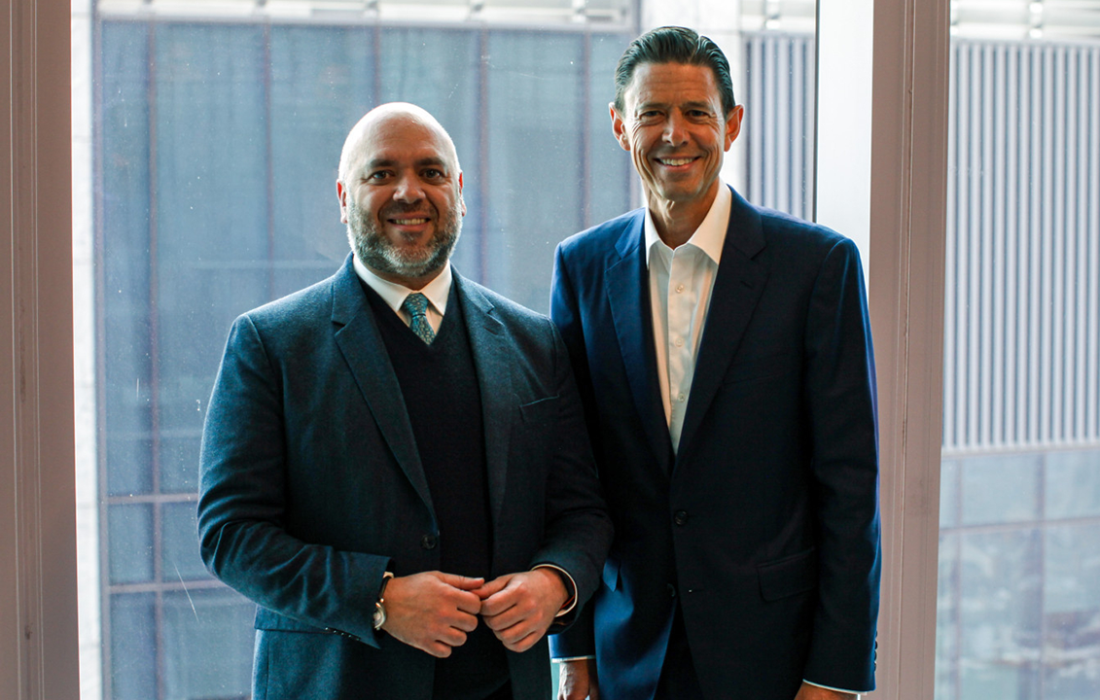
HOF Capital, the New York-based investment firm with over $10 billion in assets under management, has agreed to lead a consortium acquiring Porsche’s equity stakes in both Bugatti Rimac and Rimac Group. The transaction was signed on April 24. It marks one of the most significant ownership changes in the luxury automotive sector in recent years. HOF Capital becomes the largest external shareholder in Rimac Group alongside founder Mate Rimac.
Porsche held a 45% minority stake in Bugatti Rimac, the joint venture it established with Rimac Group in 2021 to house the Bugatti brand, as well as a 20.6% stake in Rimac Group itself. Both stakes will be fully divested to the HOF Capital-led consortium. The consortium includes institutional investors across the US and the EU. Upon completion, Rimac Group will take control of Bugatti Rimac. HOF Capital will join as the largest shareholder in Rimac Group alongside Mate Rimac.
The transaction remains subject to regulatory clearances by relevant authorities. Completion is expected before the end of 2026. Financial terms have been kept confidential by the parties.
Why You Should Care
HOF Capital is not a traditional automotive investor. The firm built its reputation on early identification of companies and categories before they become consensus, backing businesses like Anthropic and SpaceX from their earliest stages. Its investment thesis spans AI, frontier technologies, critical infrastructure, and what it describes as iconic brands. Bugatti Rimac is a significant expression of that final category: a non-obvious entry into a space that most technology investors have not yet treated as investable.
The deal also signals something broader about where patient, long-horizon capital is moving. Bugatti is not a growth-stage startup. Bugatti is 115 years old. It has survived two world wars, multiple ownership structures, and the wholesale transformation of the automotive industry. Investors entering now are making a specific bet. They believe the convergence of heritage branding, electric powertrain technology, and global appetite for ultra-luxury experiences is a durable and appreciating asset class.
The structure of the transaction reflects the ambition of Mate Rimac’s broader project. When Porsche and Rimac Group established Bugatti Rimac in 2021, the stated goal was to give Bugatti a home that combined the brand’s heritage with Rimac’s electric powertrain expertise. In the intervening years, Rimac Group has developed into what Porsche’s CEO Michael Leiters describes as “an established Tier-1 automotive technology company,” with over 2,000 employees across Croatia and Europe developing hypercars, battery systems, powertrain systems, electronics, stationary storage systems, and robotaxis.
Porsche frames its decision to exit as a strategic refocus rather than a retreat. “We will focus Porsche on the core business,” said Leiters in the announcement.
For Rimac, the ownership change enables a faster execution on a long-term vision that has always been his own. Mate Rimac, who serves as CEO of Bugatti Rimac, described the new structure as one that allows the company to “execute even faster” following the foundations Porsche’s partnership helped establish.
Hisham Elhaddad, co-founder and managing partner of HOF Capital, said the firm was drawn by the rare combination of legacy and innovation that Bugatti represents. “For over a century, Bugatti has stood apart as a brand where heritage and innovation coexist at the highest level,” he said.
The Ripple
The transaction joins a small but growing set of deals in which investment firms with strong technology and venture roots are acquiring or taking significant positions in heritage luxury brands. Established luxury brands accumulate decades of brand equity that no amount of capital can manufacture. New owners with technology and growth capital expertise can unlock value that traditional automotive and luxury conglomerates are structurally slower to pursue. The logic holds across cases.

For the automotive sector specifically, Bugatti Rimac sits at a strategically significant intersection. Rimac Technology, now a wholly owned subsidiary of Rimac Group, supplies electric powertrain systems to some of the world’s most demanding automotive manufacturers. The hypercar business, while small in volume, functions as the highest-visibility proof-of-concept for that technology. Whoever controls the brand controls the most public demonstration of what Rimac’s technology can do.
For HOF Capital, the deal extends its portfolio into a category that carries different risk and return characteristics from early-stage ventures. The firm describes its investment approach as partnering with companies “from first check through IPO.” Bugatti Rimac is a different kind of asset, but the long-horizon, conviction-driven approach is consistent.
What to Watch
Regulatory clearance is the immediate dependency. The parties signed the transaction on April 24 and expect to close before the end of 2026, giving relevant authorities a meaningful window to review the deal across its jurisdictions. WAYA first reported in December 2025 that HOF Capital was in advanced talks on the deal.
Once complete, the more substantive question is strategic. Rimac Group taking control of Bugatti Rimac, with HOF Capital as the largest external shareholder, creates an ownership structure centred on the founder and a technology-oriented investor base. What that means for Bugatti’s production pipeline, its expansion into new markets, and the pace of Rimac Technology’s commercial development will become clearer as the new ownership settles in.
HOF Capital’s entry into the luxury automotive sector will also be watched by other technology-focused investment firms that have been circling heritage brand categories without committing. If the Bugatti Rimac thesis performs, it validates an asset allocation move that a number of funds have been reluctant to make.
If you see something out of place or would like to contribute to this story, check out our Ethics and Policy section.