Saudi Arabia’s Public Investment Fund will end its financial backing of LIV Golf after the 2026 season concludes, multiple sources told CNBC and the Wall Street Journal on Wednesday. The decision ends four years of Saudi-funded disruption of professional golf. It raises an immediate question about what becomes of a league that has never operated without a sovereign wealth fund writing the cheques.
The numbers that preceded this moment are striking. LIV Golf Ltd. runs the league’s non-US operations from a UK base. It reported losses of $461.8 million in 2024, against revenue of $64.9 million and expenses of $526.7 million. That followed losses of $395.9 million in 2023 and $243.7 million in the 18 months to the end of 2022. Total losses from the international entity alone have exceeded $1.1 billion since inception. The US operations, run through a separate private entity, do not publish figures. The Financial Times estimates PIF invested nearly $5 billion into the league in total.
The league’s revenue story is equally stark. LIV received just £2.8 million, approximately $3.2 million, in broadcast rights outside the US in 2024. The PGA Tour, by comparison, earns $700 million per year from its US television partners under a deal running through 2030. The gap between those two numbers is not a gap. It is a different business category entirely.
The PIF’s decision to exit did not arrive in isolation. It is the most visible consequence of a broader strategic recalibration that the sovereign wealth fund announced in mid-April. In April, PIF’s board, chaired by Crown Prince Mohammed bin Salman, approved a 2026-2030 strategy. The document describes a shift from “rapid growth and acceleration” to “sustained value creation,” with a focus on maximizing impact and raising investment efficiency.
The practical meaning of that language is becoming clear in rapid succession. In recent weeks, PIF has sold its football club Al-Hilal, distanced itself from a flag football venture with Tom Brady, and now pulled funding from LIV. PIF governor Yasir Al-Rumayyan, who also chaired the LIV Golf board, acknowledged that the fund planned to shift away from sports and moonshot bets toward more traditional investments. He has since stepped down from his LIV board role.
PIF’s new strategy lists six priority domestic ecosystems: tourism and entertainment; urban development; advanced manufacturing; industrials and logistics; clean energy and renewables; and NEOM. Sport is not among them. That omission, in a formally approved five-year strategy document, is about as explicit a signal as a sovereign wealth fund tends to give.
The financial picture underpinning the shift is important context. PIF’s cash reserves fell to approximately $15 billion in late 2024, the lowest level since 2020. Saudi Arabia’s fiscal break-even oil price sits at approximately $108 to $111 per barrel when PIF commitments are included. Brent crude trades at approximately $105. That is a narrow margin for a fund committed to transforming an entire national economy. It explains why LIV Golf, which has never covered its own costs, became difficult to justify.
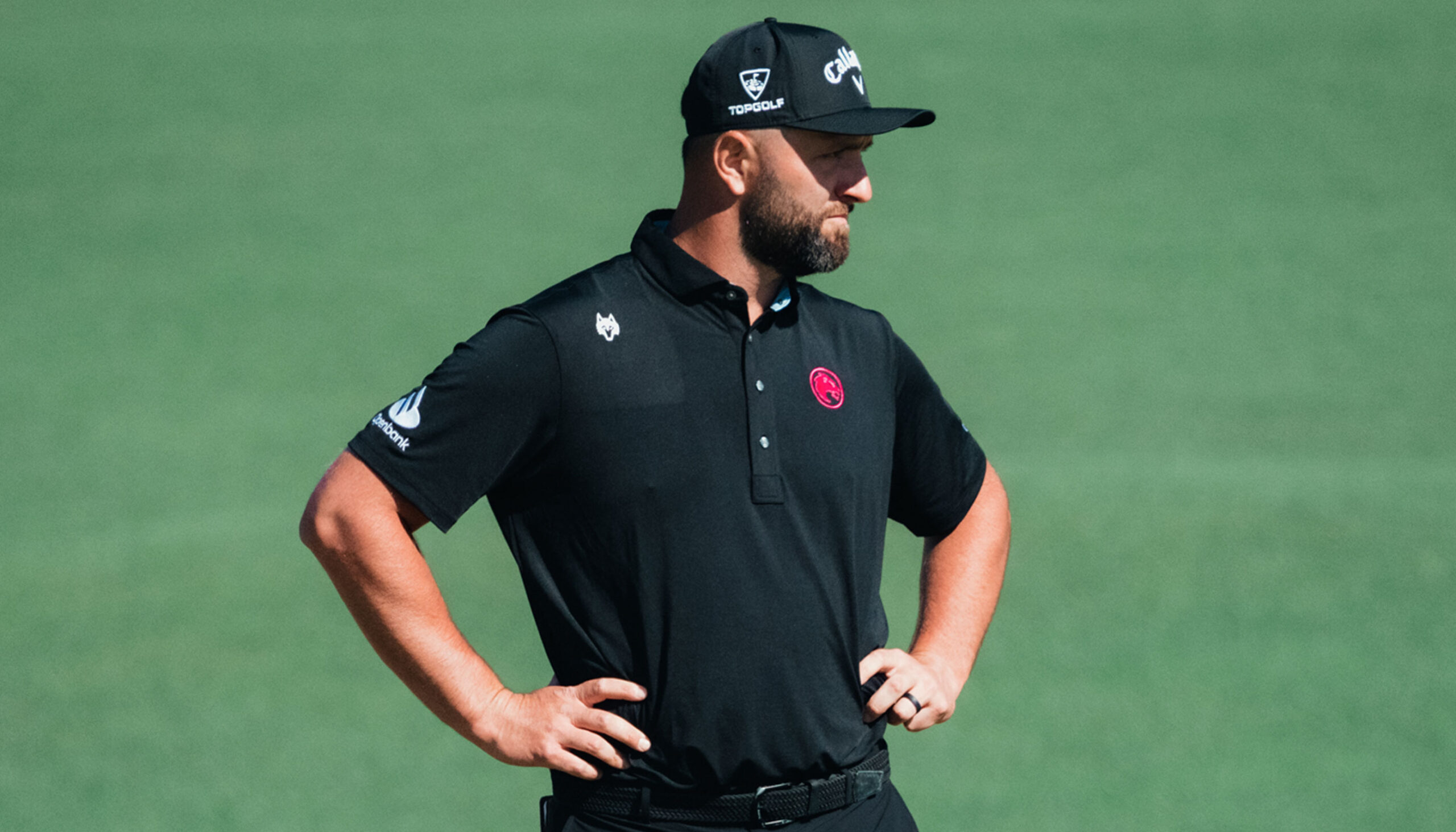
The story of LIV Golf is not simply a story about money wasted on golf. It is a story about the limits of using capital as a substitute for organic growth. When the league launched in 2022, the plan was straightforward. Guaranteed salaries and enormous prize pools would attract elite players, generate a TV audience, produce broadcast revenue, and eventually make the business self-sustaining. LIV paid out nearly $1.4 billion in prize money since 2022. Some players signed nine-figure guaranteed contracts. Jon Rahm reportedly earned $75 million in two seasons, on top of a $300 million multi-year deal. The audience never arrived at scale.
LIV Golf failed to obtain recognition from the Official World Golf Rankings for years due to its 54-hole, shotgun-start, no-cut format. The team competition element failed to catch on with fans. The league changed its format under pressure and only recently received OWGR recognition. Both moves came too late to build momentum.
The PGA Tour merger, announced with fanfare in June 2023, was meant to resolve the conflict. It never materialised. LIV’s latest filing stated the league could not predict the outcome of the 2023 framework agreement. A rival bid for the PGA Tour from a group including Liverpool and Boston Red Sox owner John Henry complicated the path further. The merger is effectively dead.
For the MENA investor and business community, the LIV Golf story carries lessons that extend well beyond sport. The PIF’s original sports investment strategy aimed explicitly at soft power and economic diversification through international visibility. It aimed to position Saudi Arabia as a global destination for capital, talent, and major events, and to normalise the kingdom’s presence in international commercial life. LIV Golf represented the most ambitious and most costly element of that strategy.
What the experiment demonstrated is that capital cannot manufacture cultural resonance at the pace a sovereign wealth fund requires. Golf’s audience in the US and UK did not redirect its attention because Saudi money paid for better prize pools. It stayed with the PGA Tour, with the majors, with the players and storylines it had followed for decades. The league hasn’t generated a significant TV audience or fan following despite years of high-profile investment.
The Saudi Pro League, which signed Cristiano Ronaldo, Neymar, and Karim Benzema on similar logic, faces the same scrutiny about long-term sustainability. Al-Hilal’s sale to Kingdom Holding at a fraction of its implied value signals the end of prestige spending without a return framework.
What happens to LIV Golf now is genuinely uncertain. A committee of independent directors is evaluating strategic alternatives and the league is engaging with prospective global investors. LIV Golf CEO Scott O’Neil said the league is on pace to earn $100 million more in 2026 than the previous season. The league has signed new partnerships with Rolex, HSBC, and Salesforce. The revenue trajectory is improving. The cost structure is not.
The immediate pressure points are the player contracts. Bryson DeChambeau’s deal with LIV runs out at the end of the 2026 season. Jon Rahm is signed through 2027. Any new investor buying into LIV Golf is buying into a league whose two biggest stars may not be there when the next season begins.
LIV has already postponed its scheduled tournament in New Orleans in late June as it seeks new funding. That cancellation is the most visible early consequence of the funding withdrawal and signals that the league is already operating differently. The question now is not whether LIV Golf survives in its current form. It almost certainly does not. The question is what, if anything, emerges from the wreckage of the most expensive disruption attempt in the history of professional sport.
If you see something out of place or would like to contribute to this story, check out our Ethics and Policy section.